
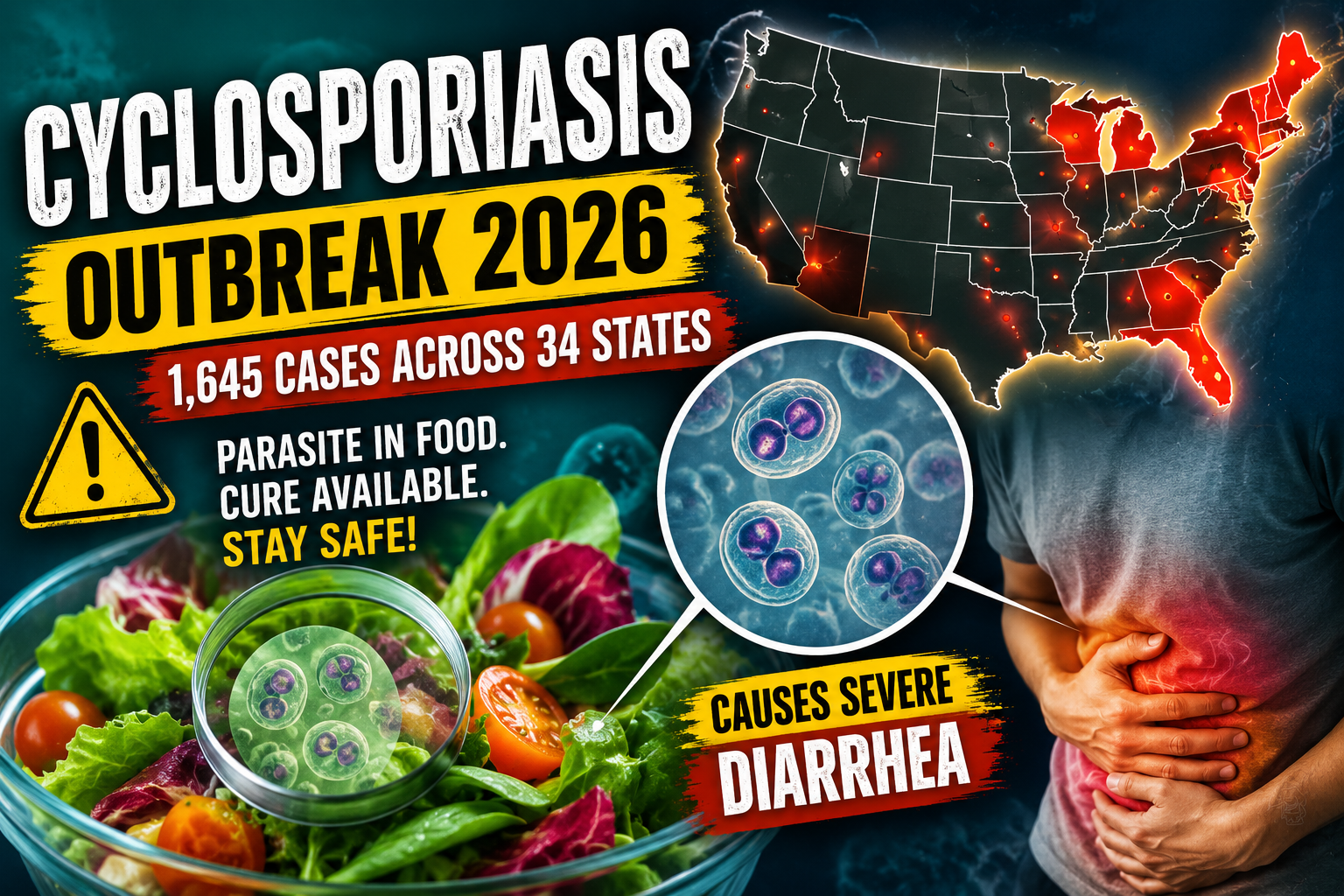
A multistate cyclosporiasis (Cyclospora) outbreak has emerged as one of the biggest U.S. foodborne disease investigations of 2026. The U.S. Centers for Disease Control and Prevention (CDC), Food and Drug Administration (FDA), and state health departments are investigating the source, but no single contaminated food product has yet been confirmed.
What is Cyclosporiasis?
Cyclosporiasis is an intestinal illness caused by the microscopic parasite Cyclospora cayetanensis. Infection usually occurs after consuming contaminated fresh produce or water. Unlike many foodborne pathogens, Cyclospora requires time outside the human body before becoming infectious, making direct person-to-person spread uncommon.
Latest Situation (July 16, 2026)
- 1,645 laboratory-confirmed domestically acquired cases reported across 34 U.S. states since May 1, 2026.
- CDC is reviewing more than 5,100 additional reports to determine whether they are linked to the current outbreak.
- Around 9% of confirmed patients required hospitalization.
- No deaths have been reported so far.
- Officials expect reported cases to continue increasing through August, which is the peak Cyclospora season.
States Reporting the Highest Activity
Current surveillance shows particularly high numbers in:
- Michigan
- Ohio
- North Carolina
- Illinois
- Connecticut
- New York
- New Jersey
- Florida
Michigan has recorded unusually high case numbers compared with previous years, although experts note this may partly reflect more aggressive testing and surveillance.
Suspected Source
The exact source has not yet been identified.
Investigators are examining exposure to:
- Leafy greens
- Lettuce
- Bagged salads
- Fresh herbs
- Other fresh produce
Some reports mention investigations involving produce supplied to restaurant chains, but CDC and FDA have not confirmed a specific supplier or product recall.
Symptoms
Symptoms usually develop 2 days to 2 weeks after infection (typically about one week).
Common symptoms include:
- Severe watery diarrhea
- Loss of appetite
- Abdominal cramps
- Nausea
- Fatigue
- Weight loss
- Low-grade fever
- Bloating
Without treatment, symptoms may continue for weeks or even months, often improving and then returning.
Why Is This Outbreak Difficult to Trace?
Cyclospora investigations are among the most challenging foodborne outbreak investigations because:
- Long incubation period makes food recall difficult.
- Fresh produce supply chains are highly complex.
- There is no whole-genome sequencing system comparable to those used for bacterial outbreaks.
- Multiple farms and distributors may supply identical produce.
CDC is relying on epidemiological interviews, traceback investigations, and targeted parasite genotyping.
Treatment
Cyclosporiasis is treatable.
The standard treatment is the prescription antibiotic:
- Trimethoprim–Sulfamethoxazole (TMP-SMX)
People with prolonged diarrhea should seek medical evaluation rather than relying solely on over-the-counter medicines.
Prevention
Health agencies recommend:
- Wash fruits and vegetables thoroughly under running water.
- Practice good hand hygiene before eating or preparing food.
- Drink safe water, especially while traveling.
- Seek medical care if diarrhea lasts more than a few days.
- Follow CDC/FDA food recall announcements.
Why This Matters
The 2026 outbreak has renewed concerns about food safety surveillance, fresh produce traceability, and public health preparedness. While no single food source has yet been confirmed, the outbreak demonstrates how rapidly a contaminated produce supply chain can spread illness across dozens of states. The CDC expects investigations to continue throughout the summer as additional cases are identified.