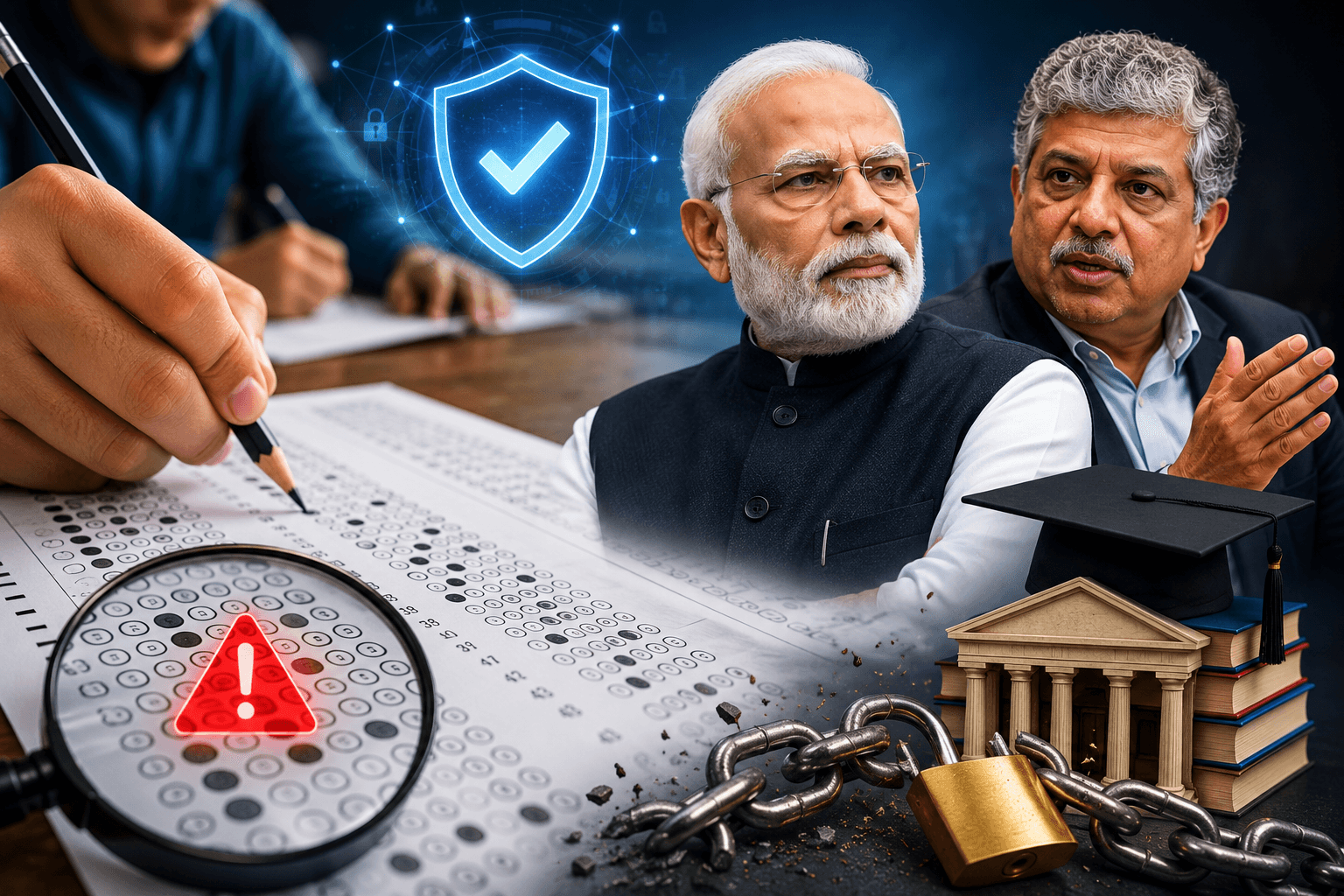
India’s examination system is set for a major overhaul. In a significant move following the nationwide debate over examination integrity and paper leaks, Prime Minister Narendra Modi has announced the formation of a high-powered task force on examination reforms, headed by Infosys co-founder and technology architect Nandan Nilekani. The initiative aims to build a more secure, transparent, and technology-driven examination ecosystem.
The announcement comes amid continued public concern over competitive exam irregularities, particularly the NEET paper leak controversy, and follows a series of government measures to restore confidence among students.
Why Was the Task Force Created?
Over the past few years, repeated incidents of paper leaks and examination malpractice have raised questions about the reliability of India’s recruitment and entrance examination system.
The government has already announced:
- Fast-track courts for paper leak cases.
- Proposed stricter anti-paper leak legislation.
- Administrative reforms within examination agencies.
- Greater use of technology to prevent future fraud.
The newly constituted task force is expected to recommend long-term structural reforms rather than temporary fixes.
Why Nandan Nilekani?
Nandan Nilekani is widely regarded as one of India’s foremost technology leaders. Beyond co-founding Infosys, he played a pivotal role in building Aadhaar, the world’s largest digital identity platform, demonstrating expertise in secure, scalable public digital infrastructure.
His experience in designing technology systems that serve over a billion people is expected to help modernize India’s examination ecosystem with stronger digital safeguards.
Beyond Aadhaar, Nilekani has helped shape several pillars of India’s digital economy.
His policy work influenced:
- Unified Payments Interface (UPI)
- India Stack
- Digital identity architecture
- Financial inclusion
- Open digital ecosystems
- Startup innovation
Today, UPI processes billions of digital transactions every month, making India one of the world’s leading digital payment ecosystems.
Interestingly, Nilekani has previously been associated with discussions on examination reforms. In 2019, the Supreme Court also considered him for a committee examining improvements in competitive examinations after paper leak concerns.
What Could Change?
Although the government has not yet released the task force’s detailed roadmap, experts expect recommendations in areas such as:
- End-to-end encrypted digital examination systems.
- AI-powered monitoring for suspicious activity.
- Stronger cybersecurity standards.
- Tamper-proof question paper distribution.
- Improved candidate verification.
- Greater transparency in recruitment and entrance examinations.
- Risk-based auditing of examination agencies.
These measures could reduce opportunities for organized paper leak networks and strengthen public trust.
Digital Outreach to Students
The announcement also reflects a broader shift in government communication.
In recent days, Prime Minister Modi has directly addressed students through Instagram videos, promising strict action against those responsible for paper leaks and emphasizing that safeguarding students’ futures remains a priority. The Prime Minister has also encouraged Union ministers to engage more actively with young people on social media platforms.
Why This Matters
India conducts some of the world’s largest competitive examinations, with millions of candidates appearing every year for admissions and government recruitment.
If the Nilekani-led task force succeeds in designing a secure, technology-first examination framework, it could become one of the most significant reforms to India’s testing system in decades. Beyond preventing paper leaks, the initiative aims to improve fairness, transparency, and public confidence in examinations that shape the careers of millions of students across the country.