In an era of escalating cyber threats, extreme weather, and aging critical infrastructure, the BBC has detailed its “Black Sky” contingency plan for maintaining essential public communication when major systems collapse. A Black Sky event refers to a widespread, prolonged failure of the electricity grid and related networks — potentially triggered by a sophisticated cyber-attack, severe storms, or other disruptions — that could leave millions without power, internet, mobile signals, water systems, and banking services.
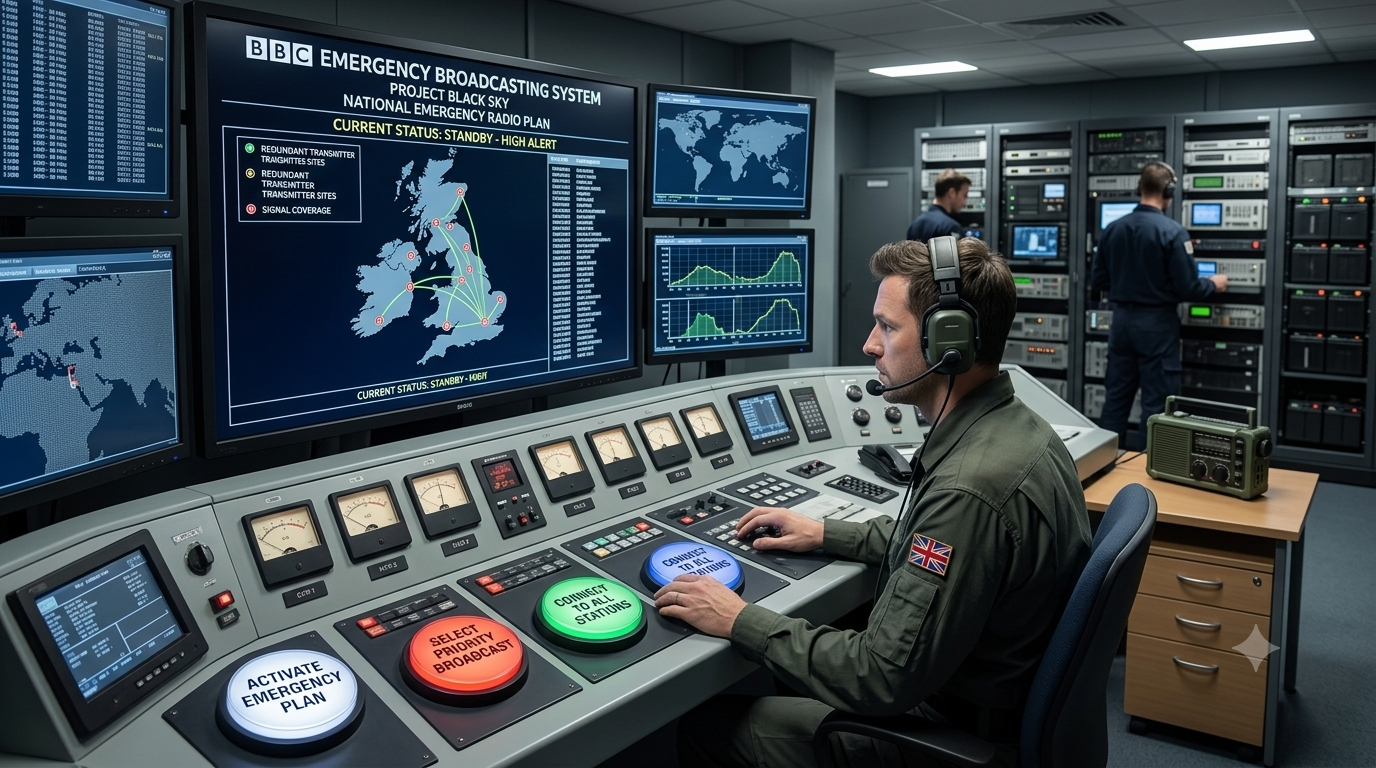
At the heart of the plan is a dedicated emergency radio studio staffed by approximately 100 BBC personnel. This facility is designed to operate completely independently of the internet and conventional power grids. It features secure communication lines, along with stockpiles of fuel, water, and food sufficient for at least three days without resupply. The studio’s primary role is to broadcast pre-arranged government messages to the public. These scripts, already prepared and in some cases published online, deliver practical survival guidance — such as recommended daily water intake and methods for disposing of toilet waste when flushing is impossible.
Broadcasts would primarily use FM radio, chosen for its resilience: it functions almost everywhere even during blackouts or crippling cyber-attacks. Transmission towers are isolated from the internet and equipped with diesel generators holding between 5,000 and 40,000 litres of fuel, enabling roughly three days of continuous operation. Additional reporting would come from journalists operating satellite vehicles stationed at emergency centres across the UK, continuing as long as diesel supplies last. Teams would coordinate via satellite phones, with pre-agreed protocols and meeting points as backups if those fail.
According to a BBC insider, earlier planning assumed a five-to-seven-day outage. Updated guidance from the National Energy System Operator (Neso) now indicates power is likely to be restored within two to three days in many scenarios. This shorter window still underscores the need for rapid, reliable information flow to prevent panic and guide public behaviour.
The plan forms part of broader UK resilience efforts. Authorities advise households to keep battery-powered or wind-up FM radios, along with other essentials such as bottled water, non-perishable food, and torches. FM radio remains the recommended channel because digital alternatives and mobile networks are far more vulnerable. Similar emergency broadcasting concepts have historical roots in Cold War-era Wartime Broadcasting Service plans, but today’s version focuses on modern threats like state-sponsored cyber operations or cascading infrastructure failures.
While the full operational details remain tightly held for security reasons, the public disclosure of the Black Sky framework highlights a pragmatic recognition: when the lights go out and screens go dark, a simple radio signal may become the nation’s most critical lifeline. The plan prioritises continuity of authoritative information precisely when it is needed most.