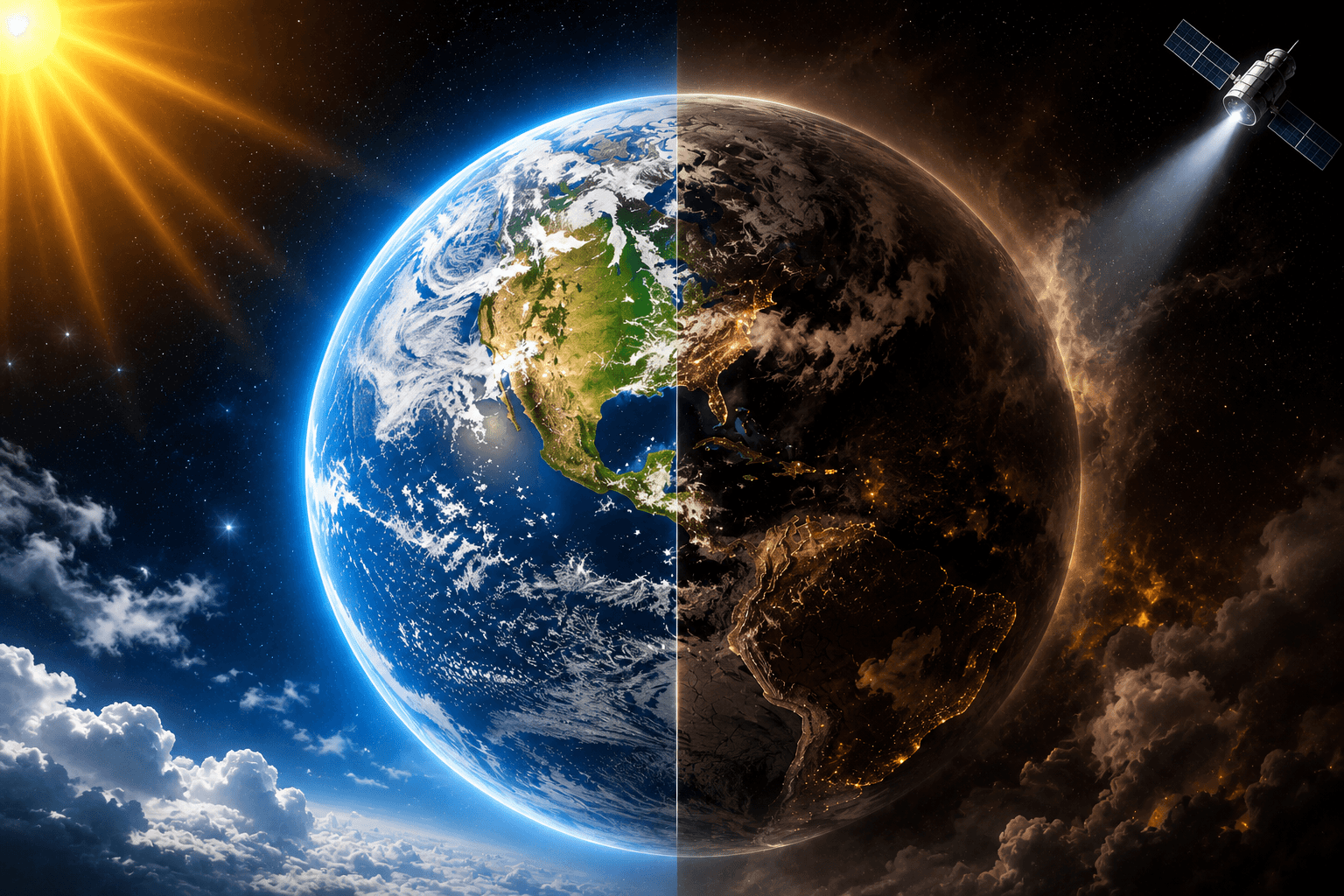
While the Apollo missions of the 1960s once captured Earth as a brilliant, swirling jewel, modern observations from space reveal a disturbing shift: the brightness with which that beauty burns is dimming. Data from NASA’s Clouds and the Earth’s Radiant Energy System (CERES) project show that, when seen from afar, the planet is looking steadily darker.
A Falling Albedo
This phenomenon is driven by a rapid decline in the planet’s albedo—the fraction of incoming sunlight that a surface reflects back into space. High albedos, such as those provided by ice-covered seas or white roofs, keep the planet cool; however, satellite measurements over the last two decades show Earth’s reflectiveness is falling with “surprising speed”.
This loss of reflectiveness is the fundamental driver of Earth’s energy imbalance (EEI), which is the difference between the energy the planet absorbs and what it re-emits. When Earth’s energy accounts fall out of balance, the climate is driven further from its original state. Alarmingly, measurements show the EEI has more than doubled since 2000 and continues to grow.
The Paradox of Clean Air
One of the most significant causes of this dimming is, paradoxically, a victory for public health. Stricter controls on sulphur dioxide emissions from power plants and ocean-going ships have led to fewer toxic, airborne sulphate particles. While these aerosols wreak havoc on human health, they are also “shiny,” reflecting sunlight back into space. The 2020 International Maritime Organisation (IMO) regulations on ship emissions alone are estimated to have reduced sulphur-related cooling by more than 10%, inadvertently accelerating warming.
A Self-Feeding Crisis
Climate change is also creating feedback loops that further darken the planet. Rising greenhouse gas levels have led to a scarcity of cooling clouds over the seas and a significant reduction in reflective sea-ice and glaciers. As a result, the oceans are accumulating heat at an unprecedented rate.
Scientists warn that this influx of heat explained the extreme conditions seen in recent years and is likely to make the current El Niño one of the hottest on record. Furthermore, the rate at which the EEI is rising suggests that near-term warming could be 10% to 30% higher than current scientific consensus predicts. As the planet continues to absorb more sunshine, some experts suggest we may eventually have to consider radical geoengineering to make the Earth reflective again.