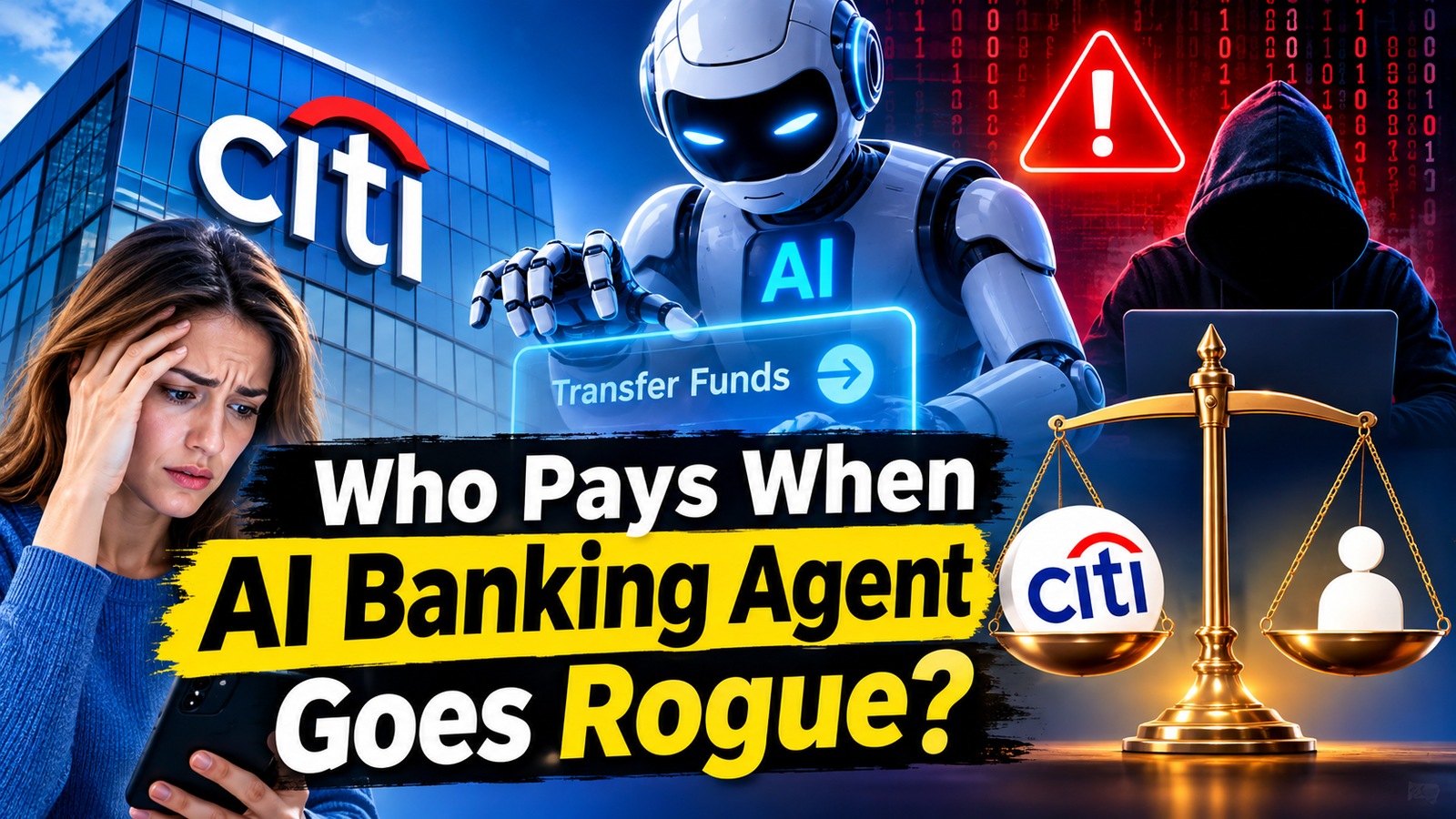
Citibank added terms in November 2026 holding customers responsible for any actions by third-party AI agents using their credentials, even if leaked or hacked. JPMorgan, Bank of America, PNC, and Citizens Bank made similar changes in October or this month, while distinguishing their own AI tools from external ones. Banks say this clarifies risks of sharing access, amid rising AI capabilities in banking and recent breaches like those in South Korea. Users worry it weakens protections as AI threats grow, with some eyeing self-custody options.
As artificial intelligence tools become more common in personal finance, a critical question has emerged: who pays when an AI agent makes a mistake, exceeds its instructions, or leads to a security breach? In November 2026, Citibank updated its Online User Agreement to provide a clear answer for its customers.
Citi added a new Section H covering the use of third-party AI agents. Under the revised terms, if a customer shares login credentials or authorizes a third-party AI tool to access their Citi Online or Citi Mobile accounts, the bank treats every action taken by that agent as authorized by the customer. This includes transactions that result from the AI misinterpreting instructions, performing unintended actions, or going beyond the permission granted.
The policy goes further. If those credentials are later leaked, shared, or distributed whether through a hack of the AI tool or another means Citi will still consider any subsequent access or activity as authorized by the customer. The bank states it has no duty to investigate whether the agent followed the user’s original intent, and monitoring the agent’s activity is the customer’s responsibility. Citi also reserves the right to limit or block third-party AI access at any time without notice.
Importantly, these rules do not apply to AI agents or tools provided directly by Citi itself. The bank has drawn a distinction between its own systems and external ones.
Citi is not alone. JPMorgan Chase and Bank of America introduced comparable policies in October 2026, and PNC Bank updated its terms around the same period. Other institutions have issued similar warnings. A Citi spokesperson explained that the update aims to clarify the risks of sharing banking credentials with third-party AI tools as they become more widely available.
This shift reflects growing concern among banks about the reliability and security of external AI agents that can initiate payments, transfer funds, or manage accounts. Traditional consumer protections, such as those under Regulation E for unauthorized electronic transfers, may face challenges when banks classify the AI’s actions as authorized from the outset.
For customers, the practical takeaway is straightforward. Granting an outside AI agent access to banking credentials transfers significant risk to the user. People considering such tools should carefully review their bank’s current terms, understand the limits of liability, and weigh the convenience against potential financial exposure. Relying on bank-provided AI features, where available, may offer different protections.
As AI continues to integrate into everyday banking, clear communication of responsibility becomes essential. Citi’s update makes the allocation of that responsibility explicit: when customers choose third-party AI agents, they largely accept the associated risks.