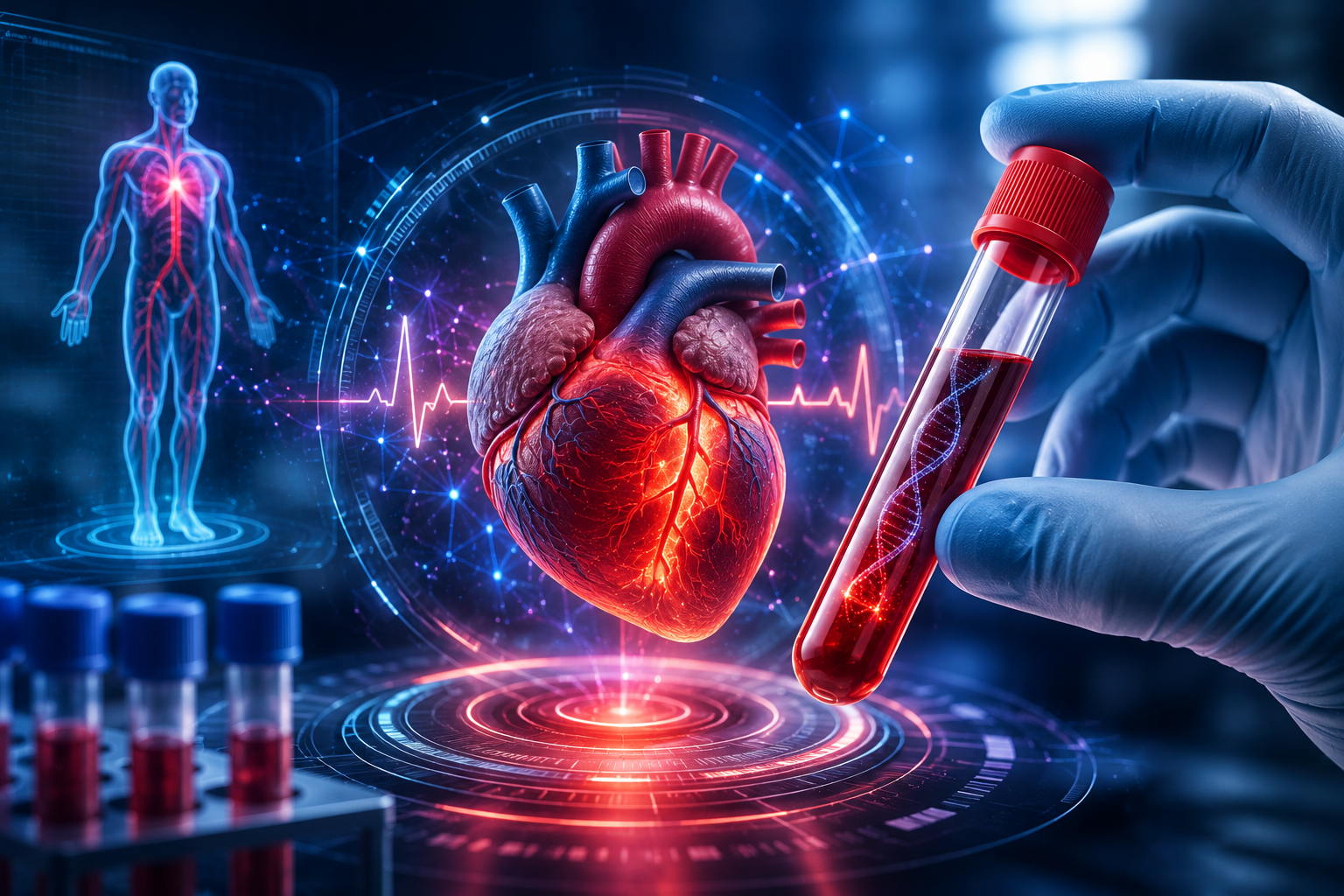
Imagine learning that you are at high risk of a heart attack or stroke more than a decade before the first warning sign appears. Researchers at the University of Hong Kong (HKU) say that future may be closer than expected after developing an artificial intelligence-powered blood test capable of predicting major cardiovascular diseases up to 15 years in advance.
Published in Nature Communications, the new tool—called CardiOmicScore—uses AI to analyze thousands of biological molecules in a single blood sample, offering what researchers describe as one of the most detailed snapshots yet of a person’s current heart health.
A Smarter Way to Detect Heart Disease
Cardiovascular disease remains the world’s leading killer, claiming nearly 20 million lives annually, according to global health estimates.
Today, doctors typically estimate heart disease risk using factors such as age, cholesterol, blood pressure, diabetes, smoking, and family history. While effective, these methods often identify patients only after harmful biological changes have already begun.
CardiOmicScore aims to change that.
Instead of relying mainly on inherited genetics, the AI system examines 2,920 blood proteins and 168 metabolites—tiny molecules produced as the body processes food, generates energy, and responds to disease. Together, these biomarkers reveal how a person’s body is functioning right now, reflecting the effects of lifestyle, diet, aging, inflammation, and environmental exposures.
Why AI Makes the Difference
The breakthrough relies on multiomics, an emerging field that combines multiple layers of biological information, including genomics, proteomics, and metabolomics.
Using deep-learning algorithms trained on data from the UK Biobank, researchers taught the AI to identify subtle molecular patterns linked to future cardiovascular disease—patterns that would be nearly impossible for humans to detect.
The result is a personalized risk score that predicts six major cardiovascular conditions:
- Coronary artery disease
- Stroke
- Heart failure
- Atrial fibrillation
- Peripheral artery disease
- Venous thromboembolism (dangerous blood clots)
Among individuals who eventually developed these conditions, the AI detected elevated risk up to 15 years before symptoms appeared.
Better Than Genetic Risk Alone
Genetic risk scores have become increasingly popular, but they come with one major limitation: your DNA never changes.
While genes reveal inherited susceptibility, they cannot account for lifestyle improvements, weight loss, exercise, dietary changes, chronic inflammation, or environmental influences.
CardiOmicScore fills that gap.
“Genes determine where we start, but proteins and metabolites reflect our current physical health,” explained Professor Zhang Qingpeng, who led the research. By decoding these constantly changing biological signals, the AI provides a much more dynamic assessment of disease risk.
The study found that CardiOmicScore significantly outperformed conventional polygenic risk scores, with even greater accuracy when combined with standard clinical information such as age and sex.
A Shift Toward Preventive Medicine
The research reflects a broader transformation in healthcare—from treating disease after it develops to preventing it before symptoms emerge.
If validated in larger and more diverse populations, the technology could allow doctors to identify high-risk patients years earlier, giving them time to recommend lifestyle changes, prescribe preventive therapies, or monitor patients more closely before irreversible damage occurs.
Researchers believe future routine health checkups could include a single blood test that generates a comprehensive cardiovascular risk profile powered by AI.
The Road Ahead
While CardiOmicScore remains a research tool rather than a clinical test, experts say it highlights how artificial intelligence is reshaping precision medicine.
Instead of waiting for heart disease to announce itself through chest pain or a medical emergency, tomorrow’s healthcare may detect invisible biological warning signs years in advance.
For millions of people at risk, that extra decade could become the difference between preventing heart disease—and treating it after it’s too late.
Reference: SD