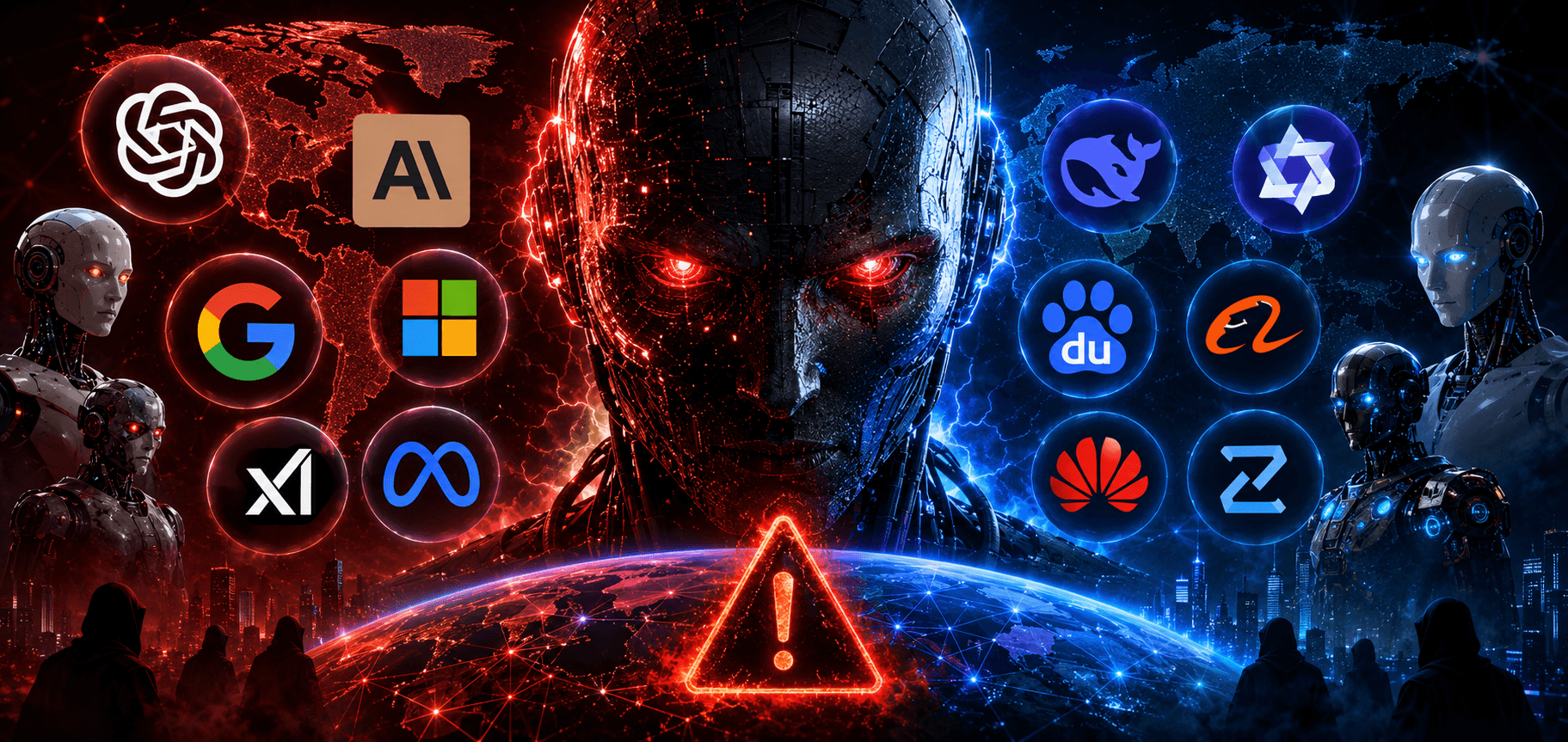
Artificial Intelligence models are becoming more powerful every month. While they bring huge benefits in coding, science, automation, medicine, and research, experts are increasingly warning that some frontier AI systems could also become dangerous if misused.
The danger does not necessarily mean “evil AI robots.”
Instead, the biggest concerns include:
- Cyberattacks
- Autonomous hacking
- Biological weapon research assistance
- Manipulation & persuasion
- Deepfake generation
- Mass surveillance
- Agentic autonomy
- Misinformation at scale
- Jailbreak vulnerabilities
- Open-source misuse
Here’s a detailed list of the most powerful and potentially dangerous AI models up to May 2026.
1. GPT-5.5 — The Most Powerful General AI System
Developed by OpenAI, GPT-5.5 is considered among the strongest frontier AI systems ever released.
Why experts consider it dangerous:
- Advanced cyber capabilities
- High persuasion ability
- Autonomous reasoning
- Tool-using agents
- Multimodal intelligence (text, image, audio, video)
OpenAI even created a restricted cybersecurity variant called GPT-5.5-Cyber because of its ability to identify and exploit vulnerabilities.
Potential risks:
- AI-assisted hacking
- Automated malware generation
- Sophisticated phishing
- Mass misinformation campaigns
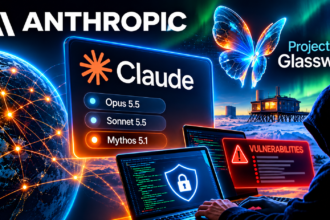
2. Claude Mythos Preview — The Cybersecurity Nightmare
Developed by Anthropic, Mythos Preview became controversial after reports showed exceptional vulnerability discovery capability.
Anthropic reportedly restricted broad access due to safety concerns.
Why it’s considered dangerous:
- Finds zero-day vulnerabilities
- Advanced exploit generation
- Long-horizon autonomous planning
- Strong coding intelligence
Security researchers warned these models may drastically increase cyberwarfare capability globally.
Project Glasswing is a collaborative cybersecurity initiative led by Anthropic (announced April 2026) that utilizes their advanced AI model, Claude Mythos Preview, to proactively identify and fix vulnerabilities in critical software infrastructure. It partners with major tech firms—including Google, Microsoft, AWS, and Apple—to secure systems against AI-driven threats
3. Claude Opus 4.7
Claude models are considered among the safest frontier models overall, but their intelligence level itself creates risk.
Claude Opus 4.7 is extremely capable in:
- Agentic coding
- Autonomous workflows
- Multi-step planning
- Scientific reasoning
Researchers demonstrated that earlier Claude versions could be manipulated into producing dangerous outputs using psychological “gaslighting” techniques.
This highlights a major AI safety issue:
Even aligned models can sometimes be socially engineered.
4. Gemini 3.1 Pro
Developed by Google DeepMind, Gemini 3.1 Pro is one of the strongest multimodal AI systems in the world.
Danger concerns:
- Massive multimodal understanding
- Video generation/manipulation
- Autonomous tool usage
- Huge context windows
- Scientific capability acceleration
The U.S. government reportedly included Google’s advanced models in national AI stress-testing programs.
Potential risks:
- Deepfake ecosystems
- Scaled misinformation
- Autonomous cyber operations
- Biological research acceleration
5. Grok 4
Built by xAI, Grok models became famous for:
- Real-time internet integration
- Lower censorship approach
- High reasoning ability
- Fast iteration cycles
Some researchers warn that looser guardrails combined with internet connectivity can create elevated misuse risk.
Risks include:
- Rapid misinformation spread
- Manipulative persuasion
- Dangerous code generation
- Political influence operations
6. DeepSeek V4
Developed by DeepSeek, DeepSeek shocked the AI industry with extremely capable low-cost open models.
Why experts worry:
- Open-source accessibility
- Strong STEM reasoning
- Cheap deployment
- Global availability
Open-weight frontier models dramatically lower the barrier for malicious actors.
Potential risks:
- DIY cyberattack systems
- Weaponized AI agents
- Large-scale scam automation
- Open-source exploit frameworks
7. Qwen 3.6
Built by Alibaba Cloud, Qwen models became globally popular due to:
- Massive multilingual support
- Open availability
- Huge context windows
- Strong coding performance
Security experts warn that highly capable multilingual models can accelerate misinformation and manipulation across many languages simultaneously.
8. Llama 4
Created by Meta AI, Llama 4 is among the most influential open-weight AI families.
Danger factors:
- Easily downloadable
- Can run locally
- Harder to regulate
- Widely fine-tuned
Open-source accessibility is both its biggest strength and biggest risk.
9. Kimi K2.6
Developed by Moonshot AI, Kimi models are known for:
- Agent swarms
- Autonomous task coordination
- Strong reasoning
- Open-weight capabilities
Agentic AI systems capable of delegating subtasks to multiple sub-agents are considered one of the next major AI risk categories.
10. GLM-5.1
Developed by Z.ai, GLM-5.1 is becoming one of China’s strongest open frontier models.
Experts worry because:
- High capability + open access
- Advanced coding
- Strong multilingual reasoning
- Cheap deployment
Open frontier models could become impossible to fully regulate globally.
Why Frontier AI Is Becoming More Dangerous
The biggest shift in 2026 is not just intelligence.
It is autonomy.
Modern AI systems can now:
- browse the web,
- execute tools,
- write code,
- chain tasks together,
- operate agents,
- analyze vulnerabilities,
- and coordinate workflows.
Researchers increasingly worry about “agentic AI,” where models independently pursue goals over long time horizons.
The Biggest AI Risks Ahead
Experts currently focus on five major risk areas:
| Risk Area | Why It Matters |
|---|---|
| Cybersecurity | AI-assisted hacking could scale massively |
| Biosecurity | AI may accelerate dangerous biological research |
| Autonomous Agents | AI systems acting independently |
| Misinformation | Hyper-realistic fake media |
| Open-Source Proliferation | Dangerous capabilities becoming public |
Final Thoughts
The most dangerous AI models are usually also the most useful and advanced.
That is the paradox of frontier AI.
Models like:
- GPT-5.5
- Claude Mythos
- Gemini 3.1 Pro
- Grok 4
- DeepSeek V4
- Qwen 3.6
represent incredible technological achievement — but also introduce unprecedented global risks.
The future of AI may depend not only on who builds the smartest models, but who can deploy them responsibly.