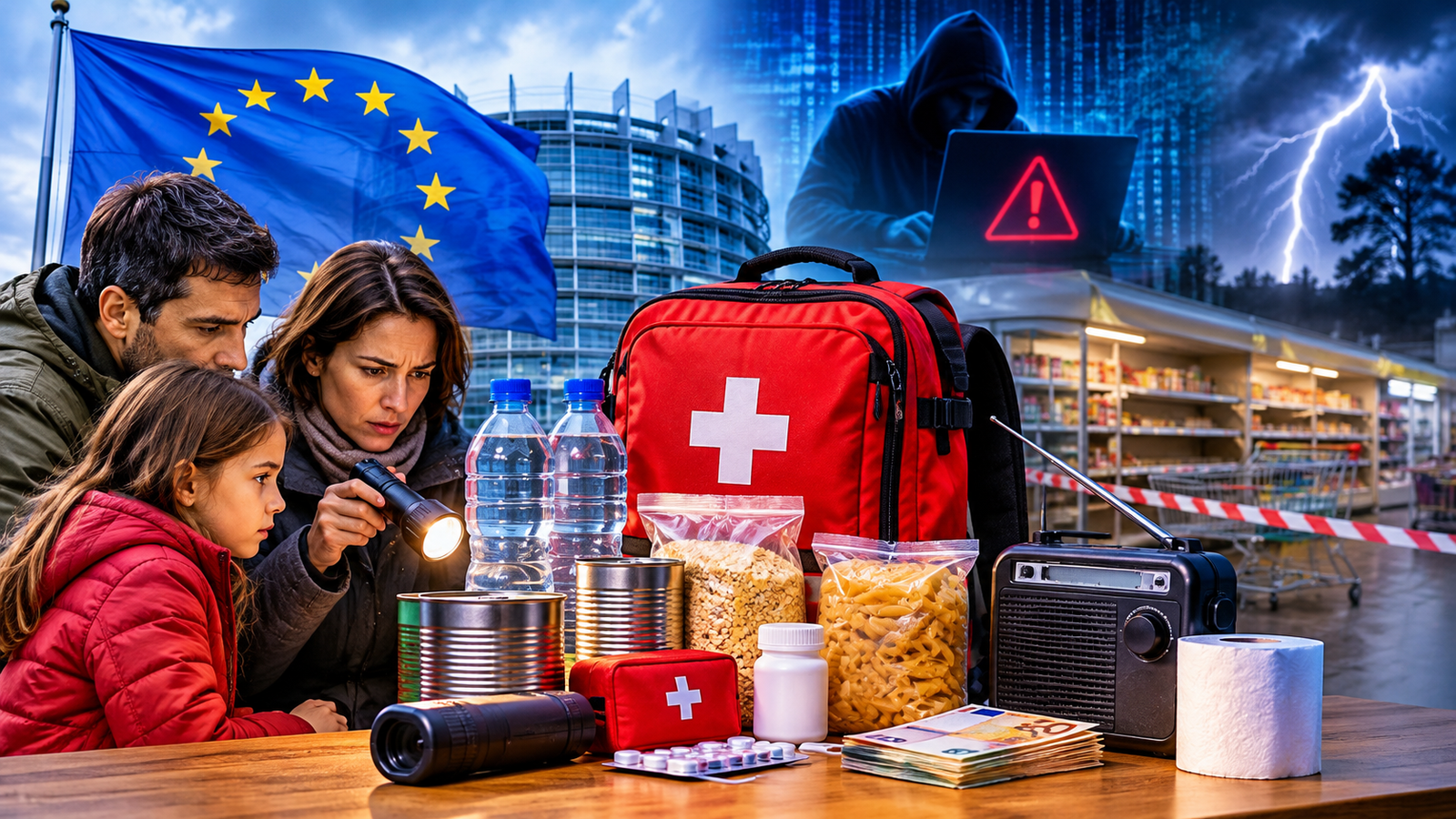
Europe is strengthening household emergency preparedness as cyberattacks, extreme weather and other disruptions expose the vulnerability of essential services. On November 3, 2026, the European Commission released new guidelines encouraging citizens to prepare for the first 72 hours of a crisis, when public assistance and basic services may not be immediately available.
The recommendations are part of the European Union’s broader effort to make communities more resilient to emergencies without depending entirely on governments and emergency responders.
What Should a 72-Hour Emergency Kit Contain?
The guidance encourages households to maintain essential supplies that can help them manage without normal access to shops, electricity, water or other services.
A basic emergency kit should include:
- Drinking water and non-perishable food.
- Essential medicines and first-aid supplies.
- Flashlights and batteries.
- Cash for situations in which digital payments fail.
- A charged power bank and other necessary emergency equipment.
The objective is to help individuals and families meet their immediate needs for three days while authorities mobilise assistance.
The guidelines are non-binding recommendations, not a legal requirement for every European household. They also form part of a wider preparedness approach rather than a prediction that a major crisis is imminent.
Supermarket Cyberattacks Highlight Europe’s Vulnerabilities
The timing of the guidance is significant. On November 3, Reuters reported a second wave of cyberattacks affecting supermarkets in eight European countries. Hackers manipulated refrigeration and freezer temperatures, forcing retailers to discard large quantities of food. The incidents followed earlier attacks on supermarkets in France and neighbouring countries.
These disruptions demonstrate how cyberattacks can extend beyond computers and financial systems to affect physical infrastructure and everyday necessities. Refrigeration failures can spoil food even when shops remain open, potentially disrupting local supplies.
However, authorities have not established that all incidents were connected or identified a common perpetrator. The attacks should therefore be understood as evidence of infrastructure vulnerabilities, not proof of an imminent continent-wide emergency.
Schools, Disability Support and Disinformation
The European Commission’s preparedness initiative goes beyond household stockpiling. It also encourages preparedness education in schools, accessible emergency planning for people with disabilities, and clearer communication of risks.
Reliable information is particularly important during crises, when rumours and disinformation can create confusion, undermine public trust and complicate emergency responses. The guidelines encourage authorities to provide timely, accessible and accurate information before, during and after emergencies.
The initiative builds on the EU Preparedness Union Strategy, adopted in March 2025, which promotes a coordinated approach to natural disasters, cyber threats, geopolitical tensions and other emergencies.
The Commission has also announced plans for an annual EU Preparedness Day, with the first edition scheduled for October 23, 2027. The date marks the anniversary of the EU Civil Protection Mechanism, established in 2001 to coordinate emergency assistance among participating countries.
What Does This Mean for Ordinary Citizens?
The central message is straightforward: emergency preparedness should begin at home, before a crisis occurs. A modest supply of food, water, medicines and essential equipment can help families manage temporary disruptions while allowing emergency services to prioritise people who need urgent assistance.
Europe’s latest guidance does not mean that war, a major blackout or a food shortage is inevitable. Instead, it reflects a growing recognition that modern societies depend on interconnected systems that can fail because of extreme weather, technical faults or cyberattacks.
The bigger lesson is that resilience begins before an emergency. Governments can strengthen infrastructure and coordinate disaster response, but households that prepare for short-term disruption may be better positioned to protect themselves when essential services are interrupted.