AI data centers in space are moving from science fiction towards experimental reality. Google has successfully run an artificial intelligence model aboard a satellite in orbit and transmitted its response back to Earth. The breakthrough could mark an early step towards a new generation of space-based computing infrastructure.
However, building commercial data centers in orbit remains a major engineering and economic challenge.
Google Project Suncatcher: AI Computing in Orbit
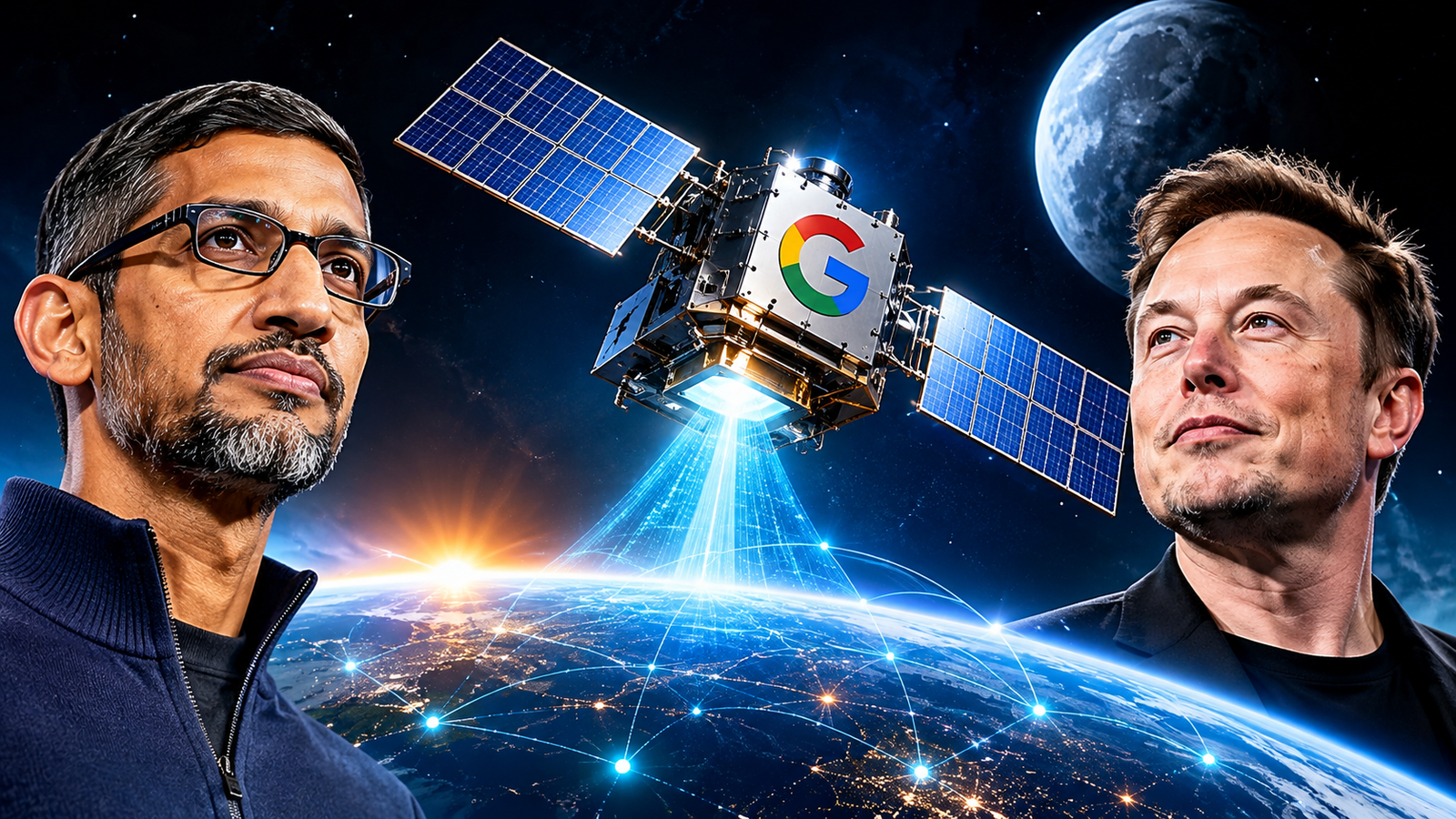
Google’s Project Suncatcher is testing whether satellites equipped with its Tensor Processing Units (TPUs) can operate as interconnected AI computing systems in space.
Launched aboard a SpaceX rideshare mission on October 1, 2026, the experimental satellite carries four Google TPUs and solar panels capable of supplying approximately 1 kilowatt of power.
In an early demonstration, Google successfully ran its Gemma 4 AI model in orbit and transmitted its first response to Earth a short haiku about space.
Google plans to test two interconnected satellites in 2027, with a longer-term vision of connecting as many as 81 satellites into an orbital computing cluster.
Sundar Pichai’s Vision for Space Data Centers
Google CEO Sundar Pichai sees space-based data centers as a potential long-term solution to the growing energy and infrastructure demands of artificial intelligence.
Earth-based data centers require enormous amounts of electricity, cooling capacity and land. Satellites could access abundant solar energy in orbit, potentially offering an alternative source of computing power.
For now, however, Google’s project remains experimental rather than a replacement for terrestrial data centers.
Elon Musk’s SpaceX Has a Bigger Orbital Plan
Elon Musk is pursuing a much larger vision. SpaceX has filed plans for a satellite network involving up to one million orbital data-center satellites.
The concept builds on SpaceX’s experience with reusable rockets and Starlink satellite manufacturing. Musk’s vision depends on dramatically reducing launch costs while developing powerful solar systems, satellite communications and heat-management technology.
These are proposed plans, not an operational million-satellite computing network.
What Breakthroughs Are Needed?
Four technologies will be particularly important:
- Reusable rockets: Lower launch costs are essential to make orbital computing economical.
- Solar power: Large, efficient solar arrays must supply continuous energy to computing hardware.
- Laser communications: Satellites need high-speed links to exchange data and coordinate computing.
- Thermal management: Space has no air for conventional cooling. Heat must be removed through specialised radiators.
Radiation protection, maintenance, cybersecurity and space debris also remain significant challenges.
Can Data Centers Move to Space?
Not immediately. Google has acknowledged that space-based data centers can currently cost up to 100 times more than terrestrial facilities.
The first practical applications may involve processing satellite imagery and other data directly in orbit, reducing the need to transmit enormous amounts of raw information to Earth.
The future of AI infrastructure may not be limited to Earth. But before orbital data centers become commercially viable, the cost of launching, powering and cooling them must fall dramatically.