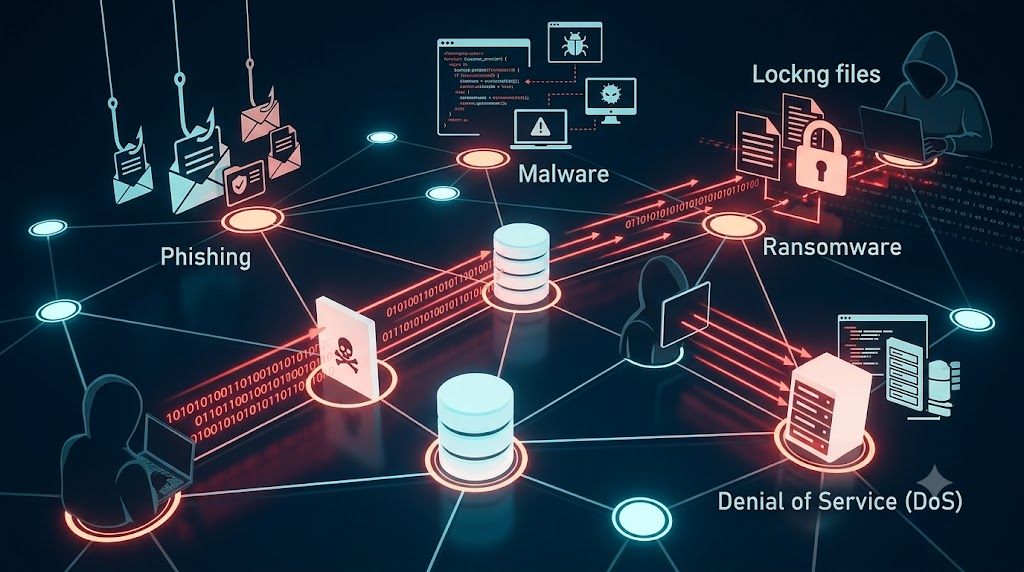
Cybersecurity threats are escalating worldwide in 2026. From massive government data leaks and banking fraud to telecom disruptions and AI-powered scams, no major economy appears immune to digital vulnerabilities.
The scale of reported incidents highlights how exposed modern economies have become.
Here is a snapshot of major cybersecurity incidents and reported disruptions across the world:
Major Cyberattacks and Data Breaches Worldwide
- Europe: Cyberattacks targeted supermarket refrigeration systems across nine European countries.
- Denmark: Approximately 8.8 million citizen records were exposed.
- Mexico: Around 195 million taxpayer records were reportedly compromised.
- France: Millions of banking and identity records were affected.
- United States: Three million people were affected by a Pentagon-related data breach.
- United Kingdom: More than 100,000 police records were leaked.
- India: State Bank of India (SBI) customer data was reportedly leaked.
- Brazil: Hackers stole approximately $27 million from a bank’s payment system.
- Italy: €95 million was transferred through an AI-powered voice fraud operation.
- Moldova: Data belonging to approximately 750,000 citizens was stolen.
- European Union: Around 350GB of data was reportedly stolen.
- Japan: Five foreign exchange (FX) firms were affected by cyberattacks.
- Singapore: All four major telecommunications companies were targeted.
These incidents demonstrate that cyber threats extend far beyond traditional computer systems. Banks, government databases, telecommunications networks, financial platforms and even physical infrastructure are potential targets.
Japan’s Banking Disruption: 128 Credit Unions Go Offline
Japan is also facing a major banking disruption.
According to the supplied report, 128 credit unions across western Japan experienced a system outage, affecting more than 3,400 branches.
ATMs, online banking services and in-person counter transactions were frozen, creating significant inconvenience for customers.
However, officials attributed the disruption to equipment failure and ruled out a cyberattack. They also warned that services might not be restored that day.
The timing was particularly difficult: the outage occurred on a Friday afternoon in one of the world’s most cash-oriented economies.
Why Global Cybersecurity Matters More Than Ever
The underlying problem is growing digital dependence.
As banking, public services, communication networks and business operations move online, a single vulnerability can disrupt millions of people and expose sensitive information.
Artificial intelligence is adding another dimension, enabling increasingly sophisticated impersonation and voice-based financial fraud.
The bigger warning is clear: cybersecurity is no longer just an IT department’s responsibility. It is a national security, financial stability and economic resilience issue.
In 2026, protecting digital infrastructure is becoming as important as protecting physical infrastructure.