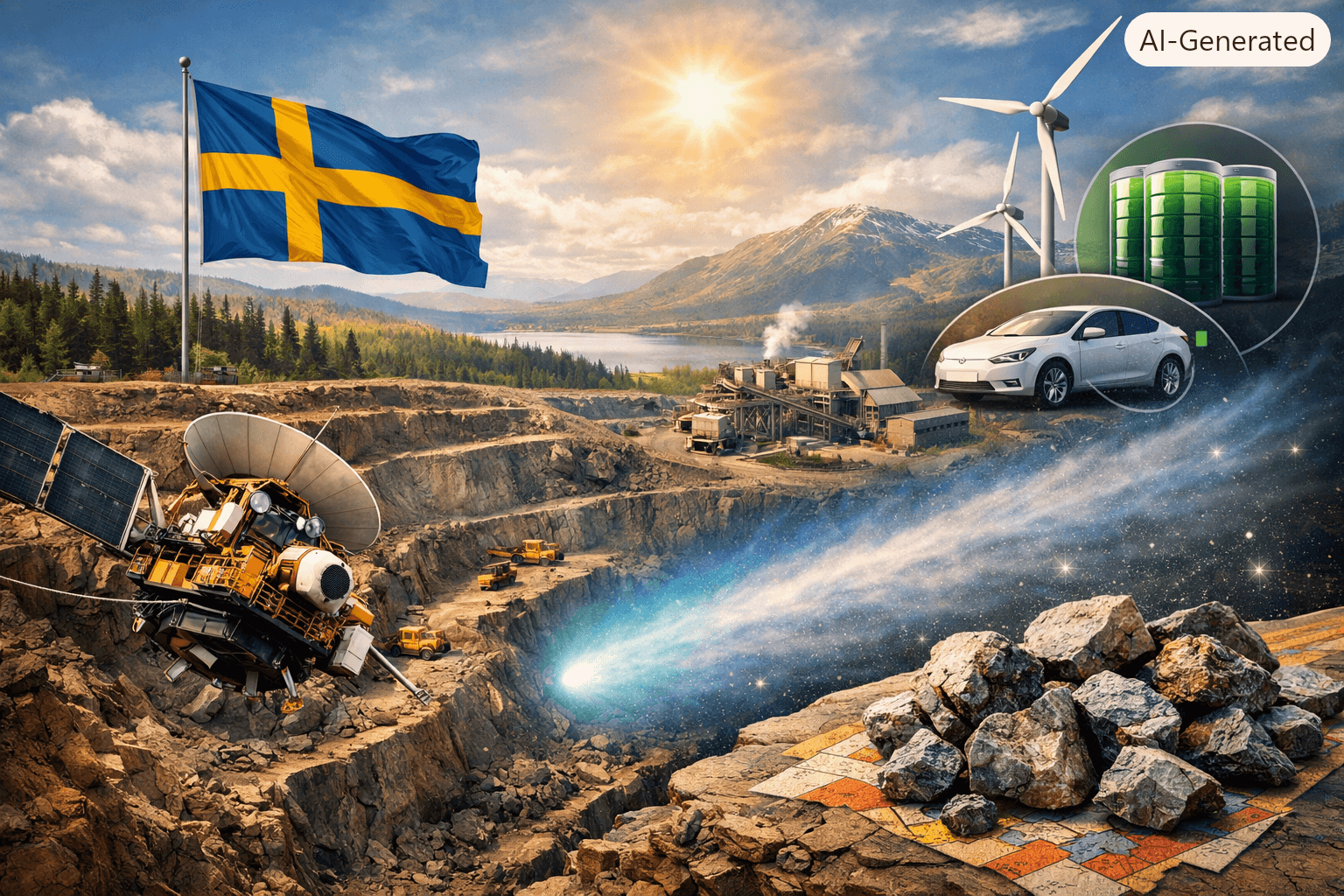
For decades, the global clean-energy revolution has relied on a hidden supply chain dominated by one country—China. From electric vehicles and wind turbines to fighter jets and AI-powered robots, almost every advanced technology depends on rare earth magnets. Now, Sweden is emerging as Europe’s strongest challenger with a radically different approach.
Why Rare Earths Matter
Rare Earth Elements (REEs) are a group of 17 critical minerals used to manufacture powerful permanent magnets found in:
- Electric Vehicles (EVs)
- Wind turbines
- Smartphones and electronics
- AI data centers and robotics
- Missiles, fighter aircraft and defense systems
- Medical imaging equipment
The minerals themselves are not extremely rare—but economically extracting, separating, refining and converting them into magnets is incredibly difficult.
China’s Rare Earth Dominance
China controls the world’s most important part of the rare earth supply chain—not just mining but processing and magnet manufacturing.
According to the International Energy Agency (IEA):
- China produces about 60% of global magnet rare earth mining
- Controls over 90% of rare earth refining
- Manufactures nearly 95% of permanent rare-earth magnets used worldwide.
This dominance has become a geopolitical tool. In recent years, Beijing has tightened export controls on critical rare earth materials amid growing strategic competition with the United States and Europe, exposing the vulnerability of global supply chains.
Sweden’s Answer: Think Beyond Mining
Instead of simply opening more mines, Swedish researchers want to reinvent how rare earth magnets are designed.
Their strategy includes:
- Mapping every valuable element inside Swedish mineral deposits rather than extracting only one target metal.
- Creating new “magnet recipes” based on naturally occurring combinations of rare earth elements.
- Designing magnets that require less purification and chemical separation.
- Maximizing resource utilization while minimizing mining waste and pollution.
The long-term goal is a sustainable “Mine-to-Magnet” ecosystem.
Sweden’s Strategic Rare Earth Advantages:
Sweden possesses several natural advantages:
Kiruna (Per Geijer Deposit)
One of Europe’s largest known rare-earth discoveries, containing around 2.2 million tonnes of rare earth oxides within a resource base of about 1.2 billion tonnes.
Other Important Deposits
- Bergslagen – historic mining region in central Sweden
- Norra Kärr – southern Sweden, rich in heavy rare earth elements
Additional strengths include:
- Abundant clean hydropower
- Reliable water resources
- Advanced mining expertise
- Strong environmental regulations
- EU support under the Critical Raw Materials strategy
In July 2026, Sweden even declared critical mineral mining a national security interest, highlighting how strategic rare earths have become for Europe’s industrial and defense future.
Cleaner Science, Smaller Environmental Footprint
Traditional rare-earth processing often involves:
- Large quantities of toxic chemicals
- Radioactive waste (thorium and uranium)
- High water consumption
- Significant carbon emissions
Swedish scientists hope their materials-first approach can:
- Reduce waste generation
- Lower chemical processing requirements
- Cut pollution
- Improve overall resource efficiency
Researchers from geology, materials chemistry, theoretical physics and engineering are collaborating to optimize every stage—from mineral discovery to finished magnet production.
Why the World Is Watching
Rare earths have become the “new oil” of the digital economy. Whoever controls magnets increasingly influences the future of electric mobility, renewable energy, AI infrastructure and national defense.
Sweden’s strategy is therefore much bigger than mining. It represents Europe’s attempt to build an independent, resilient and environmentally cleaner supply chain that reduces dependence on China while strengthening technological sovereignty.
If successful, Sweden could become one of the cornerstones of a diversified global rare-earth ecosystem—transforming the journey from rock to magnet into one of the defining industrial stories of the decade.