
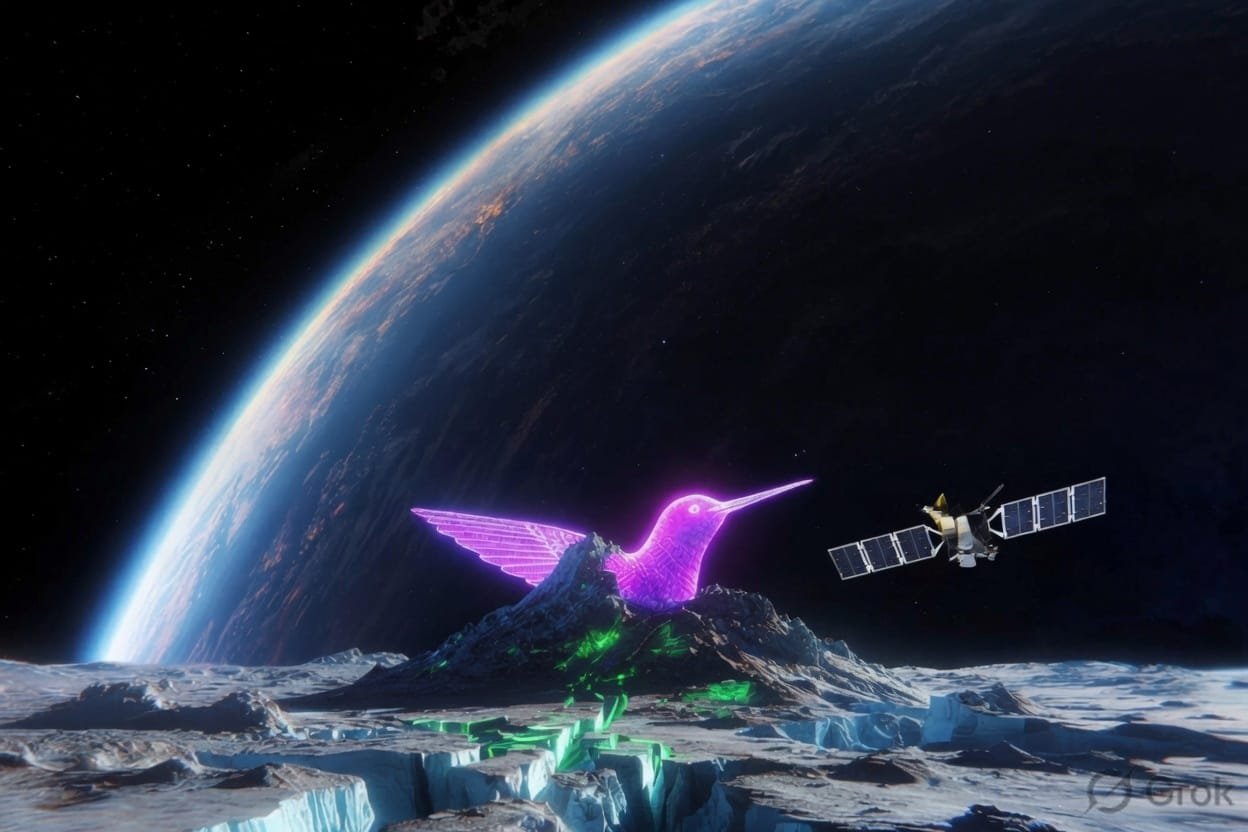
In the age of instant global connectivity, where a single compelling image can ignite widespread wonder and national pride, ISRO’s understated social media presence has drawn sharp scrutiny. The trigger: the stunning debut radar imagery from the NASA-ISRO NISAR mission that reveals a majestic “hummingbird” etched into Antarctica’s frozen expanse.
On July 20, 2026, NASA unveiled captivating L-band radar data from the NISAR satellite, showcasing Nunatak Zaterjavshijsja—a solitary rocky peak in East Antarctica. Emerging like a mythical bird amid a vast sea of ice, the formation appears with outstretched “wings” formed by deep crevasses fracturing the glacier as it flows around the obstruction. Scientists have aptly nicknamed the striking pattern “the hummingbird.”
A Masterpiece of Radar Technology
Produced from observations collected in August 2025, the image is far more than visually arresting. Using polarized microwave signals, NISAR’s L-band radar penetrates snow and ice to expose hidden geological drama. Magenta tones trace smoother ice surfaces, while vivid green lines delineate massive crevasses created by immense stresses in the flowing glacier. White areas indicate complex interactions between surface and volume scattering.
This extraordinary capability allows scientists to peer beneath the ice in ways optical satellites cannot, offering unprecedented insights into glacier movement, ice dynamics, and Antarctica’s evolving landscape—critical data for understanding global climate patterns.
A Proud Indo-US Collaboration
Launched aboard ISRO’s GSLV rocket on July 30, 2025, NISAR stands as a flagship of India-US space partnership. NASA contributed the advanced L-band instrument and the massive 12-meter deployable antenna, while ISRO supplied the S-band radar and spacecraft platform. Together, they have created one of the most powerful Earth-observing radar systems ever placed in orbit.
Yet, despite the mission’s strong Indian leadership in launch and key technologies, ISRO’s official X account—boasting more than 8 million followers—remained notably silent on the image release, with no updates since July 18.
Growing Call for Dynamic Science Communication
This silence has not gone unnoticed. On July 27, a pointed post by X user Aravind spotlighted the missed opportunity, quickly amassing over 5,300 likes and sparking widespread discussion. The post warned that such communication gaps allow adversarial narratives to flourish on other platforms, potentially shaping perceptions among India’s youth.
Engaged users called on ISRO to modernize its outreach: hire young digital creators, draw inspiration from agile private players like Skyroot Aerospace, and actively share the excitement of missions like NISAR. Many emphasized that celebrating achievements proactively is essential to building informed national pride and countering misinformation.
The Broader Imperative
ISRO has a storied legacy of remarkable accomplishments, from Chandrayaan missions to groundbreaking Earth observation programs. However, in an era where public engagement defines visibility and inspiration, traditional restraint can inadvertently cede the narrative space.
Compelling science communication is not mere publicity—it is a vital bridge connecting groundbreaking work with citizens, especially the young minds who will shape India’s future in space. The “hummingbird” frozen in Antarctic ice offers a perfect moment for ISRO to soar in public imagination.
As NISAR continues to deliver transformative data, the hope remains that India’s space achievements will not only be witnessed by the world—but proudly and vibrantly shared by its own trailblazers. The wings are there; it’s time to let them inspire.