If you’ve ever searched “when was Gen Z born?”, “Gen Z start year”, or “what generation am I?”, you’re not alone. Generational labels help researchers, businesses, and policymakers understand how different age groups experience major events, technology, and culture.
Here’s a simple guide to all major generations and their birth years.
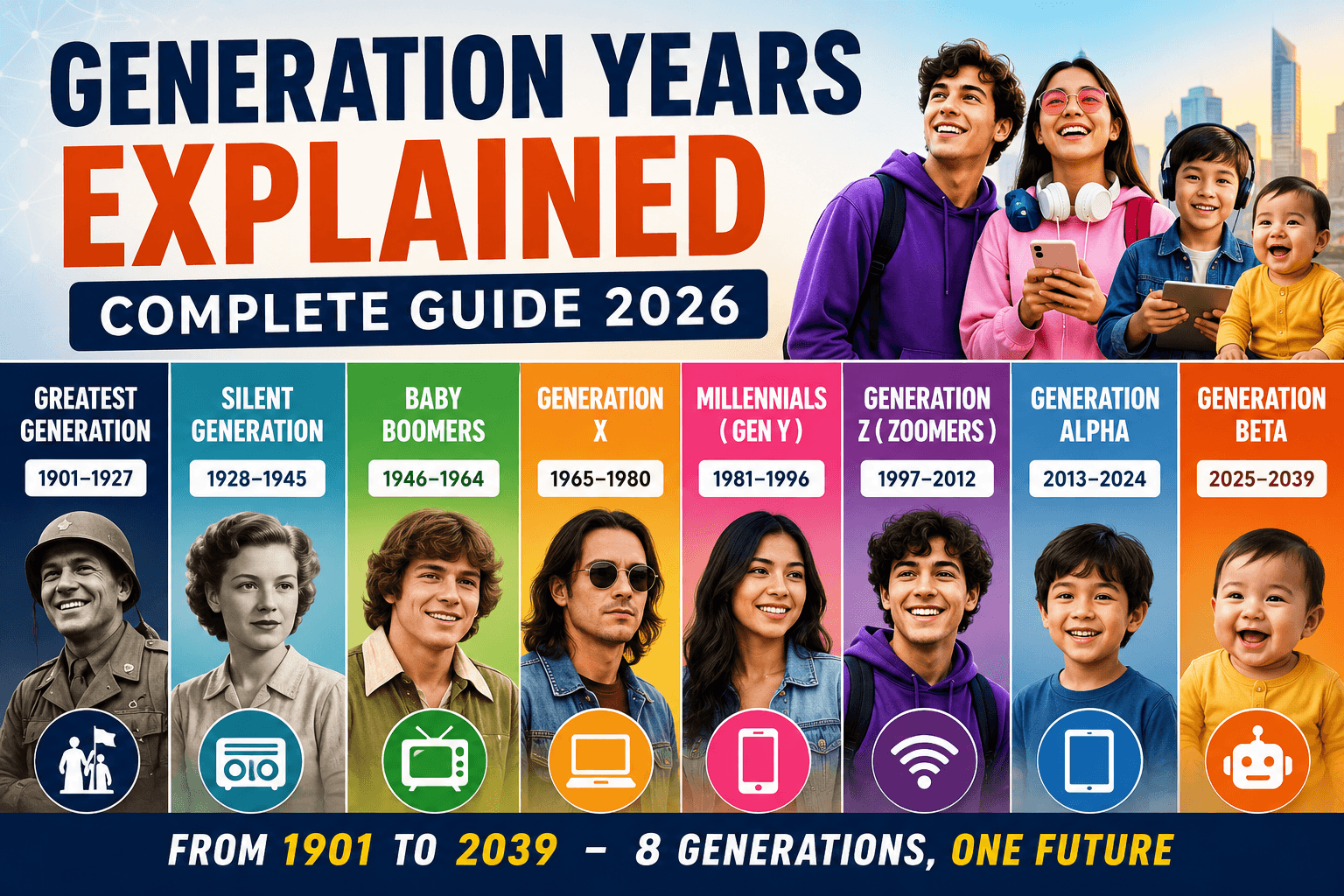
Generational Timeline
| Generation | Birth Years | Common Name |
|---|---|---|
| Greatest Generation | 1901–1927 | GI Generation |
| Silent Generation | 1928–1945 | Silent Generation |
| Baby Boomers | 1946–1964 | Boomers |
| Generation X | 1965–1980 | Gen X |
| Millennials | 1981–1996 | Gen Y |
| Generation Z | 1997–2012 | Gen Z / Zoomers |
| Generation Alpha | 2013–2024 | Gen Alpha |
| Generation Beta | 2025–2039 | Gen Beta |
Generational Labels:
— Insights | Integration🖊️ (@conect_insights) June 20, 2026
1. Greatest Generation (1901–1927)
2. Silent Generation (1928–1945)
3. Baby Boomers (1946–1964)
4. Generation X (1965–1980)
5. Millennials (Gen Y) (1981–1996)
6. Generation Z (Gen Z / Zoomers) (1997–2012)
7. Generation Alpha (2013–2024)
8. Generation Beta…
When Did Gen Z Start and End?
Generation Z (Gen Z) includes people born between 1997 and 2012.
In 2026, Gen Z members are approximately 14 to 29 years old. They are the first generation to grow up with smartphones, social media, and high-speed internet from an early age.
Key Characteristics of Gen Z
- Digital-first generation
- Heavy users of social media and AI tools
- Greater focus on mental health and climate change
- Prefer flexible work and online learning
- Strong interest in entrepreneurship and the creator economy
Who Are Millennials (Gen Y)?
Millennials were born between 1981 and 1996.
They witnessed the rise of the internet, smartphones, and social media during their teenage or adult years. Today, they make up a large share of the global workforce.
What Is Generation Alpha?
Generation Alpha includes children born between 2013 and 2024.
They are growing up with artificial intelligence, smart devices, voice assistants, and digital classrooms from early childhood.
What Is Generation Beta?
Generation Beta refers to children born from 2025 to 2039.
Experts expect this generation to experience widespread AI integration, robotics, autonomous transportation, and highly personalized digital education throughout their lives.
Why Do Generational Labels Matter?
Researchers, marketers, employers, and governments use generational categories to understand changing consumer behavior, education patterns, workplace expectations, and voting trends. While birth-year ranges may vary slightly across organizations, these labels provide a useful framework for studying long-term social and economic change.
Frequently Asked Questions
When was Gen Z born?
Between 1997 and 2012.
When did Gen Z start and end?
Gen Z started in 1997 and ended in 2012.
What generation comes after Gen Z?
Generation Alpha (2013–2024).
What generation comes after Gen Alpha?
Generation Beta (2025–2039).
From the Greatest Generation to Generation Beta, each generation has been shaped by different technologies, economic conditions, and world events. Understanding these generations helps explain changing lifestyles, workplace trends, political attitudes, and consumer behavior in today’s rapidly evolving world.