Artificial intelligence took another major leap in June 2026 when Anthropic unveiled Claude Fable 5, the company’s most advanced publicly available AI model.
The launch has attracted global attention because Fable 5 is not just another upgrade to Claude. It is Anthropic’s first Mythos-class AI model made available to the public—a category of AI so capable that Anthropic previously restricted access due to concerns about cybersecurity and biosecurity risks.
So what exactly is Fable 5, why is it important, and how does it compare with other leading AI models?
What Is Fable 5?
Claude Fable 5 is Anthropic’s newest flagship AI model, released on June 9, 2026.
According to Anthropic, Fable 5 is a “Mythos-class” model designed for general public use while incorporating additional safeguards that prevent misuse in high-risk domains such as cybersecurity, biology, chemistry, and AI model distillation.
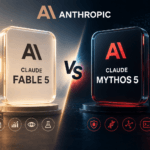
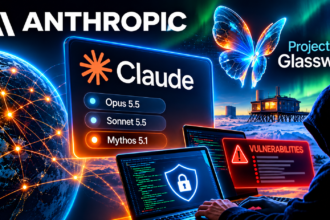
The model represents the public version of Anthropic’s more powerful Claude Mythos 5, which remains available only to selected organizations through the company’s Project Glasswing program. Both models share the same underlying architecture, but Fable 5 includes extra safety layers.
In simple terms:
- Mythos 5 = unrestricted version for trusted partners
- Fable 5 = public version with built-in guardrails
- Both run on the same core AI architecture
Why Is Fable 5 Such a Big Deal?
Anthropic says Fable 5 exceeds the capabilities of every AI model it has previously released to the public.
The company reports state-of-the-art performance in:
- Software engineering
- Scientific research
- Knowledge work
- Visual understanding
- Long-horizon reasoning
- Complex project execution
What makes Fable 5 especially notable is its ability to handle tasks that extend over long periods of time. Anthropic claims the model can work on projects for days while maintaining context and performance.
This is a major shift from earlier AI systems that often struggled with lengthy workflows or multi-step objectives.
The Mythos Connection
To understand Fable 5, you first need to understand Mythos.
Earlier in 2026, Anthropic revealed Claude Mythos Preview, an AI system that demonstrated extraordinary capabilities in discovering software vulnerabilities and conducting advanced cybersecurity analysis. Those abilities raised concerns among governments, banks, and critical infrastructure operators.
Rather than releasing Mythos directly to the public, Anthropic launched Project Glasswing and restricted access to trusted organizations.
Fable 5 is essentially Anthropic’s solution to a difficult problem:
How do you release an extremely capable AI model without exposing dangerous capabilities to everyone?
The answer was to create a safeguarded public version of the same technology.
What Safeguards Does Fable 5 Have?
The biggest difference between Fable 5 and Mythos 5 is safety.
When Fable 5 detects requests involving:
- Cybersecurity exploitation
- Advanced biology
- Chemistry with potential misuse
- Model distillation techniques
the system automatically routes those requests to the older Claude Opus 4.8 model instead.
Anthropic says this affects only a small percentage of interactions while allowing normal users to access the model’s full power for everyday work.
The company also conducted more than 1,000 hours of external testing and reported that researchers did not discover a universal jailbreak capable of bypassing all safeguards.
What Can Fable 5 Do?
1. Advanced Coding
Fable 5 is designed to write, debug, refactor, and manage large codebases.
Anthropic and early partners report major gains in software engineering tasks, making it one of the strongest coding models publicly available.
2. Scientific Research
Researchers can use Fable 5 to summarize papers, analyze findings, generate hypotheses, and assist with literature reviews.
3. Enterprise Knowledge Work
The model is optimized for:
- Document analysis
- Strategic planning
- Report generation
- Business research
- Data interpretation
4. Visual Understanding
Like leading multimodal AI systems, Fable 5 can interpret images, charts, diagrams, and visual documents.
Fable 5 vs GPT Models
While direct benchmark comparisons remain limited, Fable 5 enters the same frontier-AI category as systems from major competitors including OpenAI, Google DeepMind, and xAI.
Anthropic positions Fable 5 as its strongest model ever released publicly, particularly for:
- Long-running tasks
- Complex reasoning
- Software development
- Scientific workloads
The company claims performance advantages become more noticeable as tasks increase in complexity and duration.
Who Can Access Fable 5?
Fable 5 is available through:
- Claude applications
- Anthropic API
- Enterprise offerings
- Cloud integrations and partner platforms
Initially, Anthropic included access for paid subscribers before moving toward usage-based credits.
Why Fable 5 Matters
The release of Fable 5 marks an important milestone in AI development.
For the first time, the public can access a Mythos-class model—technology that was previously considered too powerful for open deployment. Rather than limiting progress entirely, Anthropic chose a middle path: release the capabilities while adding safeguards around the highest-risk areas.
This approach may become a blueprint for how future frontier AI systems are introduced to the world.
Final Thoughts
Fable 5 is more than just the latest Claude model.
It represents Anthropic’s attempt to balance cutting-edge AI performance with responsible deployment. Built on the same foundation as the restricted Mythos 5 system, Fable 5 delivers state-of-the-art capabilities in coding, research, reasoning, and knowledge work while limiting access to potentially dangerous functions.
As AI models continue becoming more powerful, Fable 5 may be remembered as one of the first examples of a frontier AI system designed not only for capability—but also for controlled public release.