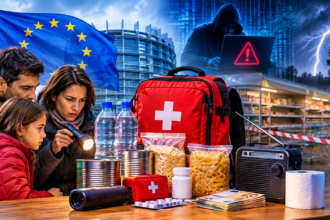
Many governments recommend that households prepare to manage independently for a period without power, running water, communications, or other essential services. The most common baseline is at least 72 hours (three days), though some advise a week or more. This helps during the initial phase of disruptions from severe weather, cyberattacks, natural disasters, or other crises while emergency services focus on those in greatest need. Advice is generally longstanding or recently reinforced rather than tied to one specific imminent threat.
Below is a compiled overview of countries and regions with such guidance, based on official or widely reported recommendations (durations noted where specified).
Europe
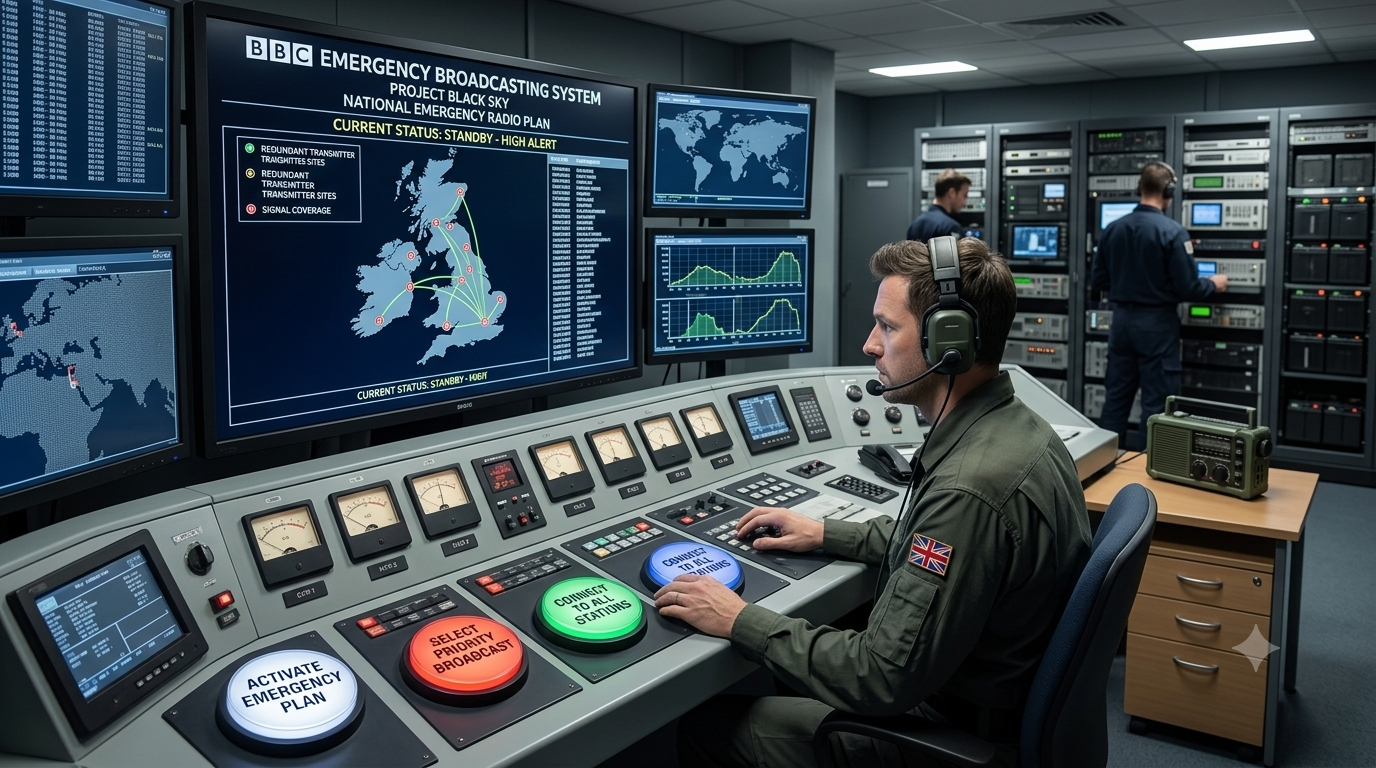
- United Kingdom: “Be Ready” campaign (launched Oct 2026) — prepare for 3 days of disruption (power, water, phones/internet); water ~3 L/person/day for drinking plus more, non-perishable food, torch, radio, power bank, cash, medicines.
- France: “Tous responsables” guide — 72-hour emergency kit (e.g., ~6 L water per person total, food, medicines, radio, torch); regional reinforcement (e.g., Normandy).
- Germany: Ideally up to 10 days of food/water (at least 3 days helpful); includes cash, medicine, and shelter considerations.
- Netherlands: 72 hours without basic essentials; practical kit guidance (e.g., water ~3 L/person/day).
- Belgium: At least 72 hours / 3 days; emergency kit with water (several litres daily range), food, and basics.
- Finland: At least 72 hours (longstanding “72 hours” concept); drinking water and essentials.
- Denmark: 3 days; water ~3 L/person/day.
- Sweden: At least 1 week (including potential crisis or war scenarios).
- Norway: 1 week (raised from shorter earlier advice).
- Estonia: Around 1 week.
- Poland: At least 3 days.
- Ireland: Household emergency planning with multi-day supplies (aligned with 3-day guidance in related campaigns).
- Luxembourg: 72-hour self-sufficiency guidance.
- Austria: 10–14 days in some guidance.
- Switzerland: About 1 week of food (water often shorter, e.g., 3 days).
- Lithuania, Latvia, Czech Republic, Croatia, and other EU members: Generally aligned with or supporting at least 72 hours via national guides or the EU framework.
- European Union (overall): Preparedness Union Strategy aims for population self-sufficiency of at least 72 hours as a minimum guideline for member states.
North America
- Canada: At least 72 hours without power or running water (longstanding Public Safety Canada advice, recently reaffirmed); water often 2–4 L/person/day range depending on source, food, and kit items.
- United States: Several days of supplies (Ready.gov/FEMA); typically 1 gallon (~3.8 L) water per person per day for drinking and sanitation.
- Mexico: Around 48–72 hours or multi-day kits in national guidance.
Asia
- Japan: At least 3 days (preferably 1 week) of food, water, and portable toilets; reinforced with new Disaster Management Agency focus on earthquakes and disasters.
- Taiwan: Around 1 week in civil-defence/public safety guidance.
- Philippines, Singapore, South Korea: Multi-day (often 3-day baseline) emergency kits or preparedness advice.
- Thailand: 72-hour emergency bag guidance.
- Israel, India: Emergency kit recommendations (durations vary or less rigidly specified in some reports).
Oceania
- New Zealand: At least 3 days (more preferred); water ~3 L/person/day.
- Australia: State-level guidance (e.g., Queensland 3 days); national preparedness messaging often aligns with multi-day self-sufficiency.
South America
- Chile: 48–72 hours.
- Colombia, Argentina, Brazil: National or regional emergency kit and multi-day supply recommendations (exact durations vary by source).
Africa
- South Africa: Emergency preparedness and stockpile guidance (often multi-day, with local variations).
Additional countries and territories appear in broader tallies of roughly 30+ nations promoting household stockpiles of food, water, medicines, lighting, radio/power, and cash. Exact lists and details can differ by source and update over time. Recommendations typically emphasize practical, non-perishable items that require no cooking or refrigeration, plus copies of documents and personal needs (medications, infant/pet supplies).
These are resilience measures, not panic signals.
For the most accurate and up-to-date lists, quantities, and local risks, consult official government emergency preparedness websites in each country.