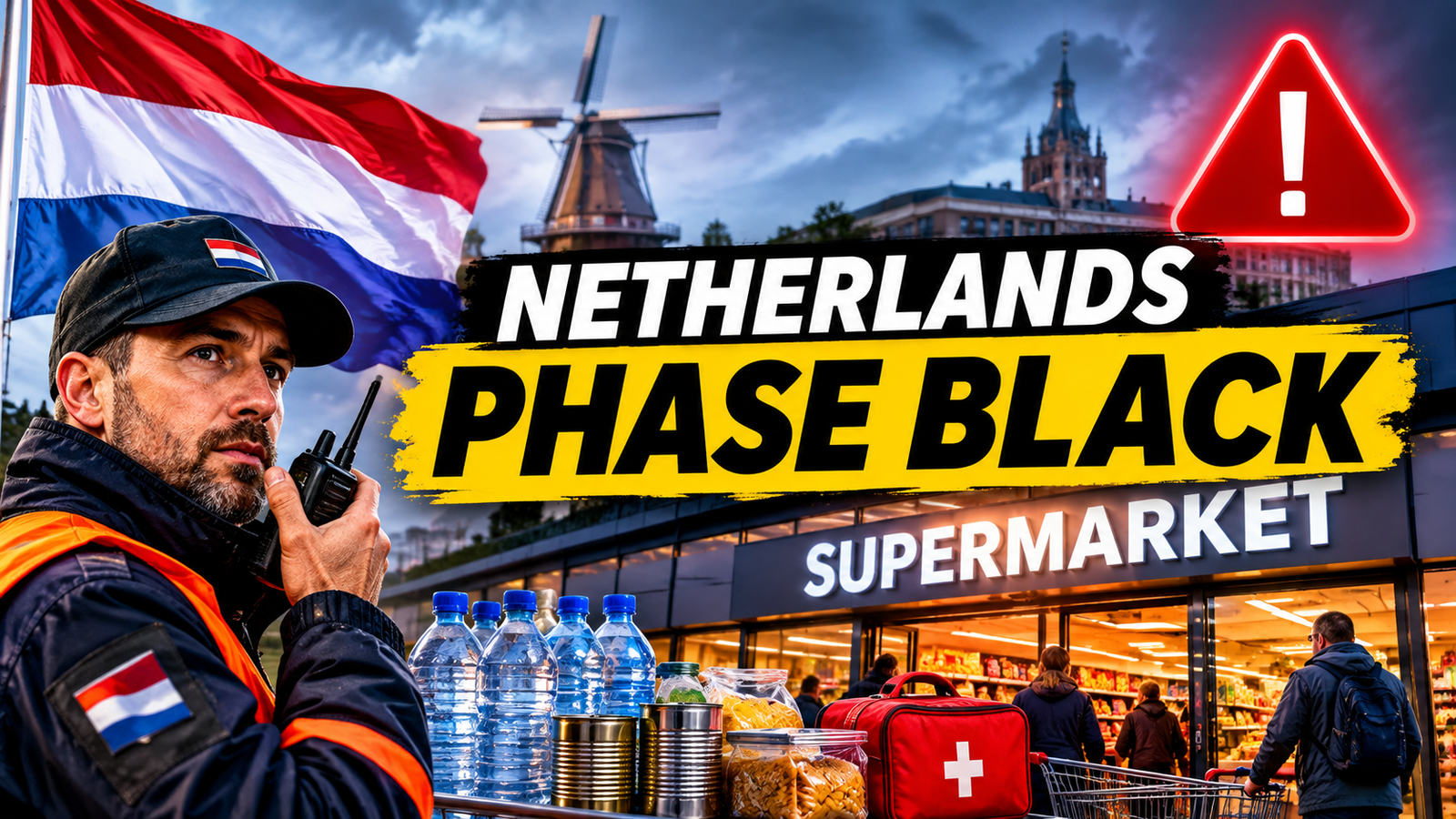
The Netherlands is preparing an unusual emergency plan that could turn ordinary supermarkets into emergency food distribution centres during a major national crisis. The proposal, known as ‘Phase Black’, aims to keep essential food supplies available if war, a large-scale cyberattack or a prolonged nationwide power outage disrupts normal services.
Under the proposed arrangement, selected existing supermarkets would be equipped with backup electricity generators and emergency stocks of essential food. The objective is to ensure that every resident in the Netherlands can reach an operational emergency supermarket within a 15-minute drive.
The initiative reflects growing concerns about the vulnerability of modern food supply chains, particularly their dependence on electricity, digital infrastructure and highly coordinated distribution networks.
Albert Heijn Cyberattack Exposes Food Supply Risks
The preparations gained urgency following a cyber incident involving Albert Heijn, one of the Netherlands’ largest supermarket chains, in October 2026.
The incident forced the company to temporarily shut down parts of its IT infrastructure, disrupting distribution centres, online grocery orders and deliveries. Some supermarket shelves experienced shortages, particularly of fresh produce.
The episode exposed a critical weakness: even when food is available, supermarkets can struggle to distribute it if their digital systems fail.
Researchers have warned that modern retailers operate with relatively limited backup inventories, relying on continuous deliveries and sophisticated digital logistics systems.
How Would Phase Black Work?
According to reports published on November 15, the Dutch supermarket industry is developing plans to designate selected stores as emergency outlets.
The proposed measures include:
- Backup generators: Keeping essential supermarket operations running during electricity failures.
- Emergency food stocks: Maintaining supplies of essential products for crisis situations.
- Alternative distribution: Developing ways to move food when conventional digital logistics systems stop working.
- Geographical coverage: Ensuring residents can reach an emergency supermarket within approximately 15 minutes by car.
The Netherlands has around 4,500 supermarkets, but only a selected number would need to be converted into emergency facilities.
The Central Bureau of Food Trade (CBL), which represents Dutch food retailers, is discussing the preparations with the Ministry of Agriculture. Funding, stock management and the exact selection of emergency stores still need to be worked out.
Why Is the Netherlands Preparing Now?
The proposal comes amid growing European concerns about hybrid threats, infrastructure vulnerabilities and prolonged power disruptions.
A major cyberattack or military conflict could affect not only electricity networks but also payment systems, transport infrastructure, warehouses and food distribution.
The Dutch government is also developing a National Crisis Plan for Food Security to strengthen the country’s ability to maintain essential supplies during emergencies.
The bigger lesson is that food security is no longer just about producing enough food. It is also about keeping electricity, digital infrastructure, transport and distribution systems operational when a crisis strikes.
The Netherlands’ emergency supermarket proposal could offer a model for other European countries reconsidering how their essential supply chains should function during national emergencies.