Elon Musk’s recent post — “Data centers in space looking pretty appealing right now” — reflects a practical response to mounting constraints on Earth. Global data centre electricity consumption reached about 415 terawatt-hours (TWh) in 2024, or roughly 1.5% of worldwide electricity use. The International Energy Agency projects this will roughly double to around 945 TWh by 2030, growing at about 15% annually and accounting for nearly 3% of global demand.
In the United States the pressure is sharper. Data centres used about 4.4% of U.S. electricity in 2023 (176 TWh). Updated analyses indicate they could reach 6.7–12% by 2028 and around 11.8% by 2030 (with a range of 9.5–15.3%). Grid connection delays stretching years, local opposition, land and water constraints, and rising power prices are slowing new builds just as AI demand accelerates.
Musk has stated that terrestrial compute will become “peanuts compared to orbital compute.” He forecasts that the volume of orbital capacity deployed each month will probably exceed new terrestrial additions by the end of 2028 and far surpass them in 2029, with nearly all superintelligence-class AI compute eventually moving to space.
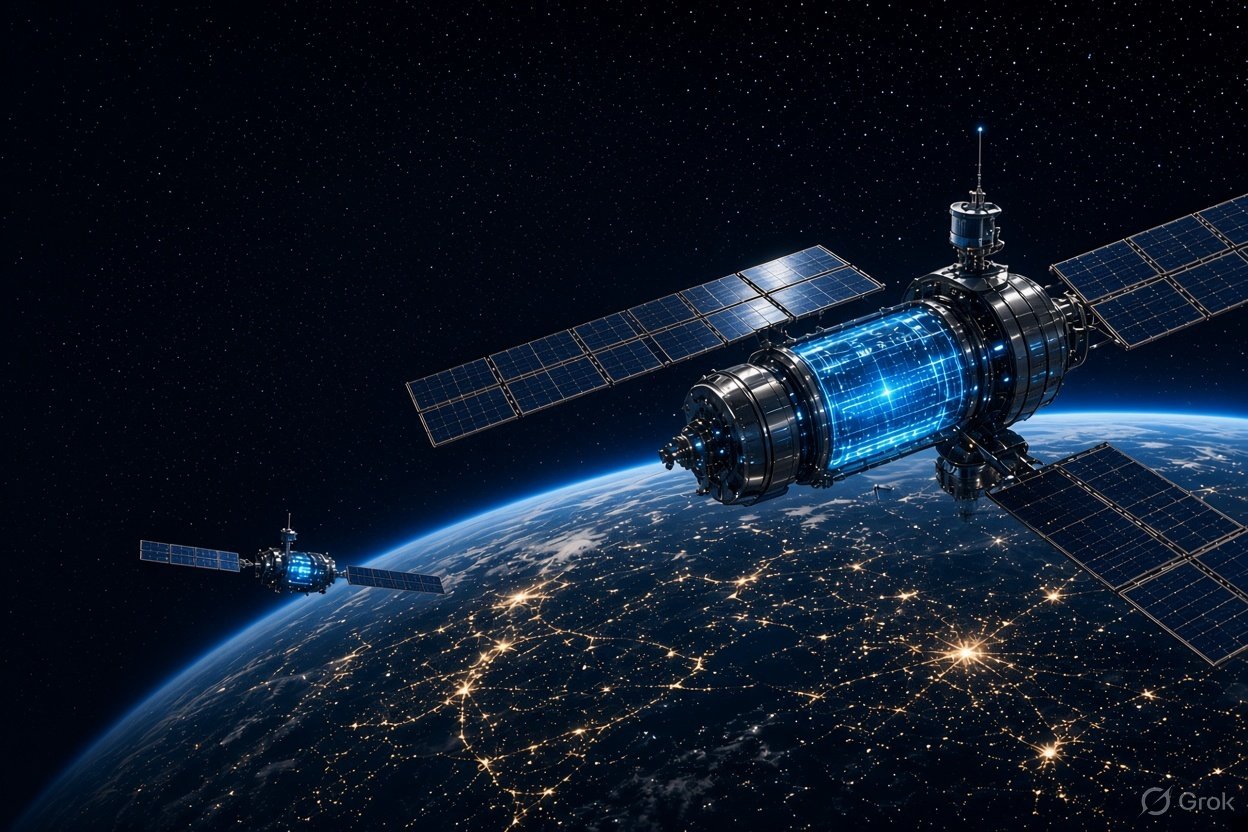
The physics favour orbit. In suitable sun-synchronous orbits, solar panels receive nearly continuous sunlight and can generate up to eight times more energy per area than mid-latitude ground arrays. The vacuum provides an efficient radiative heat sink, eliminating the need for large water-cooling systems. SpaceX’s planned Starmind (Star Mind) AI satellites are designed to deliver more than 250 kW of solar power each roughly 20% more than the International Space Station supporting compute payloads of up to 250 kW peak and about 175 kW average. The company has sought regulatory approval for a constellation of up to one million such satellites.
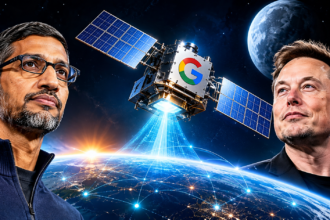
Google is already testing the concept. Its Project Suncatcher prototype, launched on 1 October 2026 with four TPUs and about 1 kW of solar power, returned its first AI-generated response a haiku from the Gemma 4 model on 30 October. Twin interconnected satellites are planned for 2027.
Significant hurdles remain, including launch costs, radiation hardening, thermal management at scale, and data latency. Current estimates often place orbital systems several times more expensive than ground facilities. Yet as terrestrial power and permitting bottlenecks tighten, the combination of abundant solar energy and freedom from Earth’s infrastructure limits makes orbital data centres an increasingly serious option for the next phase of AI infrastructure.