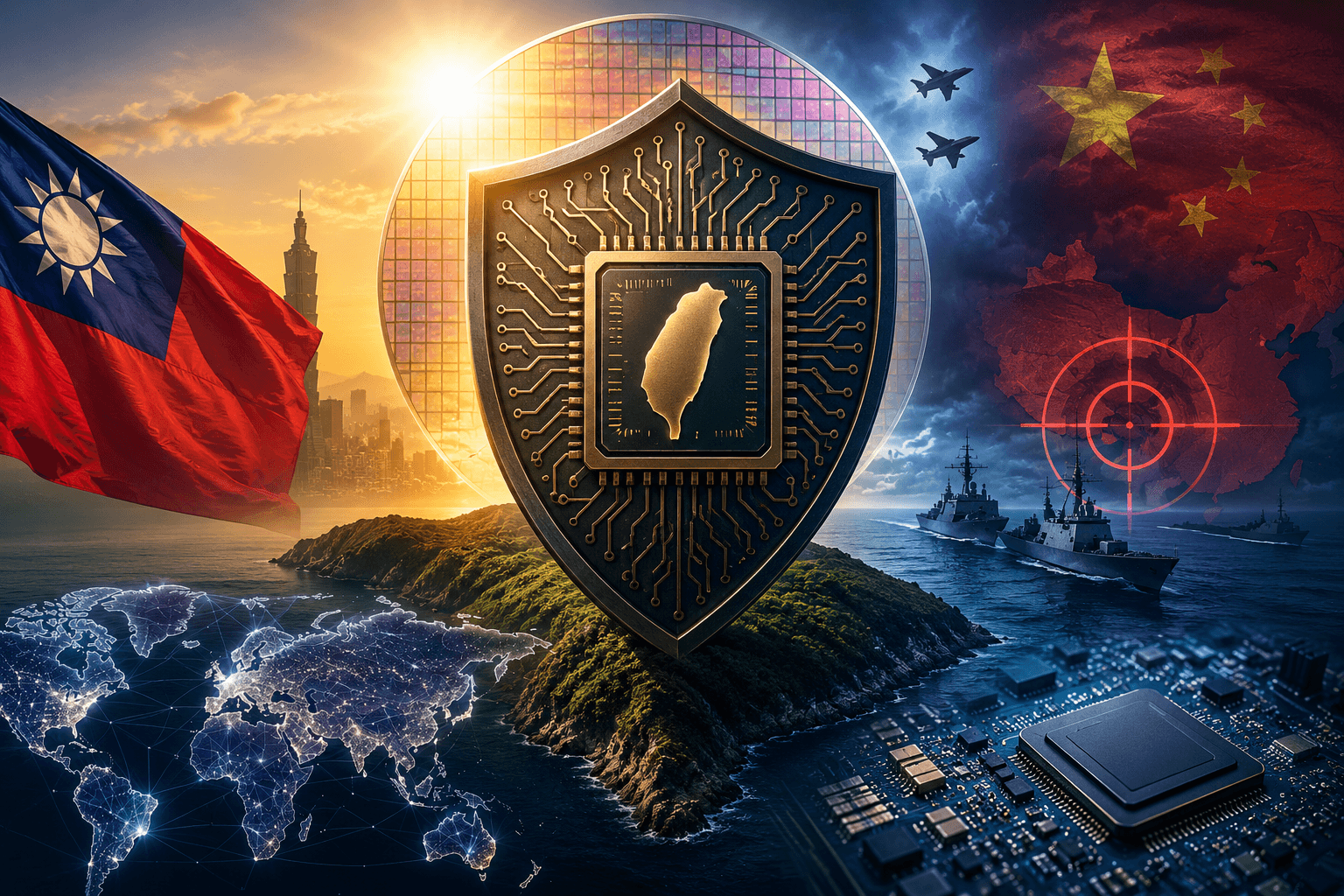
In the 21st century, semiconductors have become the new oil, powering everything from smartphones and artificial intelligence (AI) to fighter jets and supercomputers. At the center of this technological revolution is Taiwan, home to the world’s most advanced chip manufacturing ecosystem. This strategic advantage has given rise to the concept of the “Silicon Shield”—also known as Taiwan’s “Sacred Mountain.”
The following facts regarding this concept are detailed here:
Strategic Rationale
Geopolitical Value: The core idea is that Taiwan’s dominance in chipmaking makes the island too valuable for China to attack (due to the risk of destroying global supply chains) or for America to abandon.
Global Dominance: Taiwan produces approximately 90% of the world’s most advanced semiconductors, making it the “chip factory” of the world.
Strategic Positioning: Taiwan leverages this industry alongside its geographic position in the “first island chain”—the archipelago hemming in mainland China—to assert its importance to U.S. national security.
Challenges to the Shield
International Resentment: Even friendly governments resent their extreme dependence on an island that is earthquake-prone, typhoon-lashed, and reliant on imported energy and raw materials.
Pressure to Diversify: To mitigate risk, Taiwan is being pressured by allies to build foundries overseas, including major projects in Arizona (USA), Japan, and Germany.
Political Friction: President Donald Trump has challenged the “shield” narrative, falsely accusing Taiwan of “stealing” the American chip industry decades ago and using future arms sales as bargaining chips.
Weakening Concerns: Policy experts in Taipei worry that the shield is being eroded as talented engineers and advanced manufacturing (fabs) are deployed abroad.
Potential “Weaponization” of the Shield
Moral Argument: Because chipmaking is extremely energy-intensive, the government would have a “moral argument” to prioritize electricity for hospitals and civilian services over global chip production, effectively holding the world economy hostage to force intervention.
Economic Coercion: Some well-placed individuals in Taipei suggest that if the defensive shield fails to deter, it could be used as a weapon.
The Chokepoint Strategy: In the event of a Chinese blockade or energy crisis, Taiwan could stop exporting chips in the first hours of a conflict.
Why It Matters?
The Silicon Shield demonstrates that economic interdependence can serve as a powerful deterrent. However, its long-term effectiveness depends on whether Taiwan can maintain its technological leadership while balancing global demands to diversify production.
As countries race to build domestic chip industries under initiatives like the U.S. CHIPS and Science Act, the EU Chips Act, and Japan’s semiconductor revival, Taiwan’s monopoly on advanced manufacturing may gradually narrow. Yet no country currently matches its expertise in producing the world’s most sophisticated chips at scale.