One synthetic cell. Five clues. Built from non-living chemicals. Unveiled July 2026. It may redefine what it means to be alive.
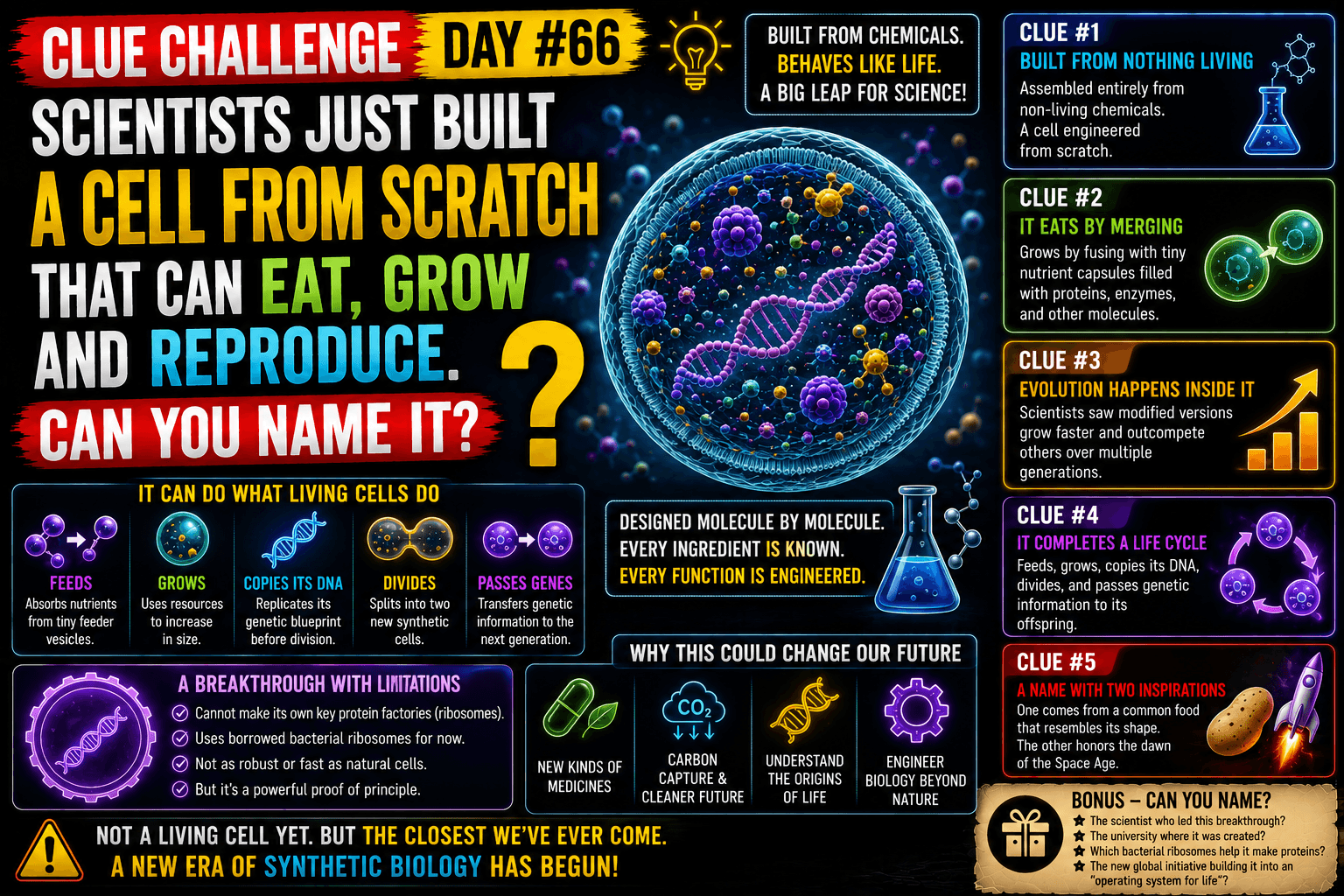
For centuries, scientists believed only nature could create something capable of growing and reproducing. This month, researchers assembled a microscopic structure entirely from chemicals that can feed, grow, copy its genetic material, divide, and pass that information to the next generation. It isn’t officially alive—but it may be the closest humanity has ever come. Can you name it before the final clue?
Clue #1 — It was built entirely from non-living ingredients, yet completes almost an entire life cycle
Researchers at the University of Minnesota have engineered what they describe as the world’s first synthetic cell capable of carrying out nearly every major step of a biological life cycle.
Unlike previous artificial cells that demonstrated only isolated functions, this one integrates multiple life-like behaviours into a single engineered system.
It can absorb nutrients, grow larger, copy its genetic blueprint, divide into offspring, and pass genetic information forward.
Not borrowed from nature.
Built piece by piece.
Clue #2 — Scientists know every molecule inside it because they assembled every molecule themselves
Lead researcher Kate Adamala says there is nothing mysterious hidden inside this microscopic structure.
Every lipid.
Every enzyme.
Every DNA fragment.
Every concentration.
Everything was deliberately added by scientists.
Because every ingredient is known, researchers can redesign it almost like engineers redesign software—making it one of the most controllable biological systems ever created.
Clue #3 — It feeds by merging with tiny nutrient capsules instead of hunting for food
Instead of eating like ordinary living cells, this artificial system grows through an ingenious engineering trick.
Tiny feeder vesicles carrying proteins, enzymes, ribosomes and nutrients fuse into it, supplying everything needed for growth.
As resources accumulate, the synthetic genome copies itself.
The structure expands.
Then divides.
A completely engineered version of cellular nutrition.
Clue #4 — Scientists watched evolution happen inside it
The team introduced a small genetic modification that allowed certain versions to fuse with nutrients more efficiently.
Those modified descendants grew faster.
Produced more offspring.
Eventually dominated the population after several generations.
In other words, researchers observed one of biology’s defining processes—natural selection—inside a system assembled entirely from non-living chemicals.
It is one of the strongest demonstrations yet that evolution can emerge without starting from a natural cell.
Clue #5 — Its unusual name hides two completely different inspirations
This is your biggest clue.
Its nickname comes partly from a vegetable that resembles its rounded appearance.
But the researchers also chose the name as a tribute to the beginning of the Space Age and to the lead scientist’s Polish heritage.
The result is an unusual name that sounds playful—but may become one of the most important names in modern synthetic biology.
So — what is this synthetic cell called?
Developed at the University of Minnesota in 2026.
Built entirely from non-living chemical components.
Capable of feeding, growing, replicating DNA, dividing, and passing genetic information to offspring.
Designed as a platform to understand how life begins—and eventually engineer new medicines, carbon-capturing organisms, advanced biomaterials, and even entirely new biological systems.
Its short nickname combines an everyday food with a tribute to the dawn of the Space Age.
Bonus — can you name:
- The scientist who led the project?
- The university where it was created?
- Which bacterial ribosomes currently allow it to make proteins?
- What new global initiative was launched to build this technology into an “operating system for life”?
Drop your answer below. Unlike Wordle, this one wasn’t discovered in nature—it was assembled molecule by molecule. Day #67 arrives tomorrow.
Missed Yesterday Challenge?
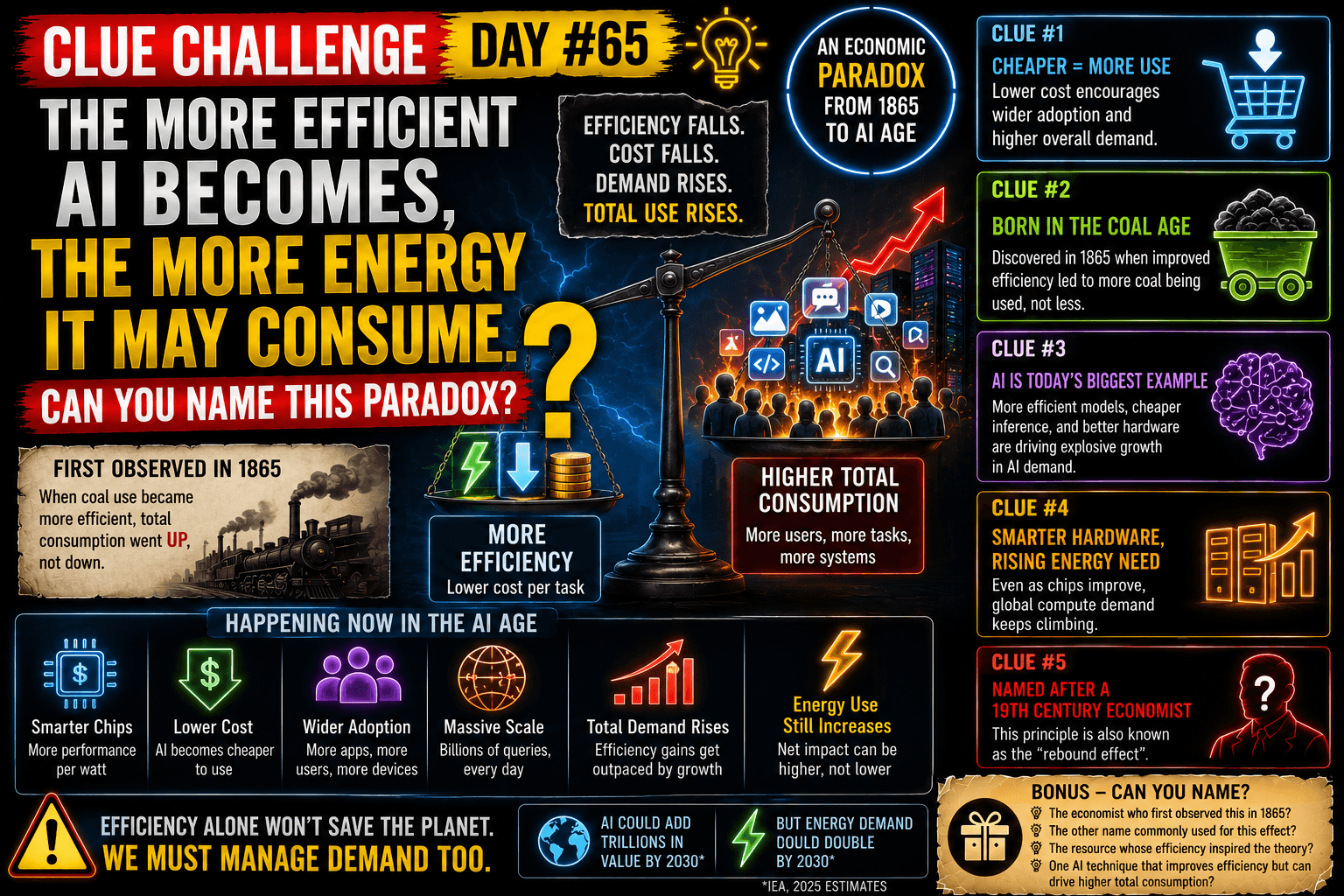
Answer to Yesterday’s Challenge: DAY #65
(Click above to reveal)