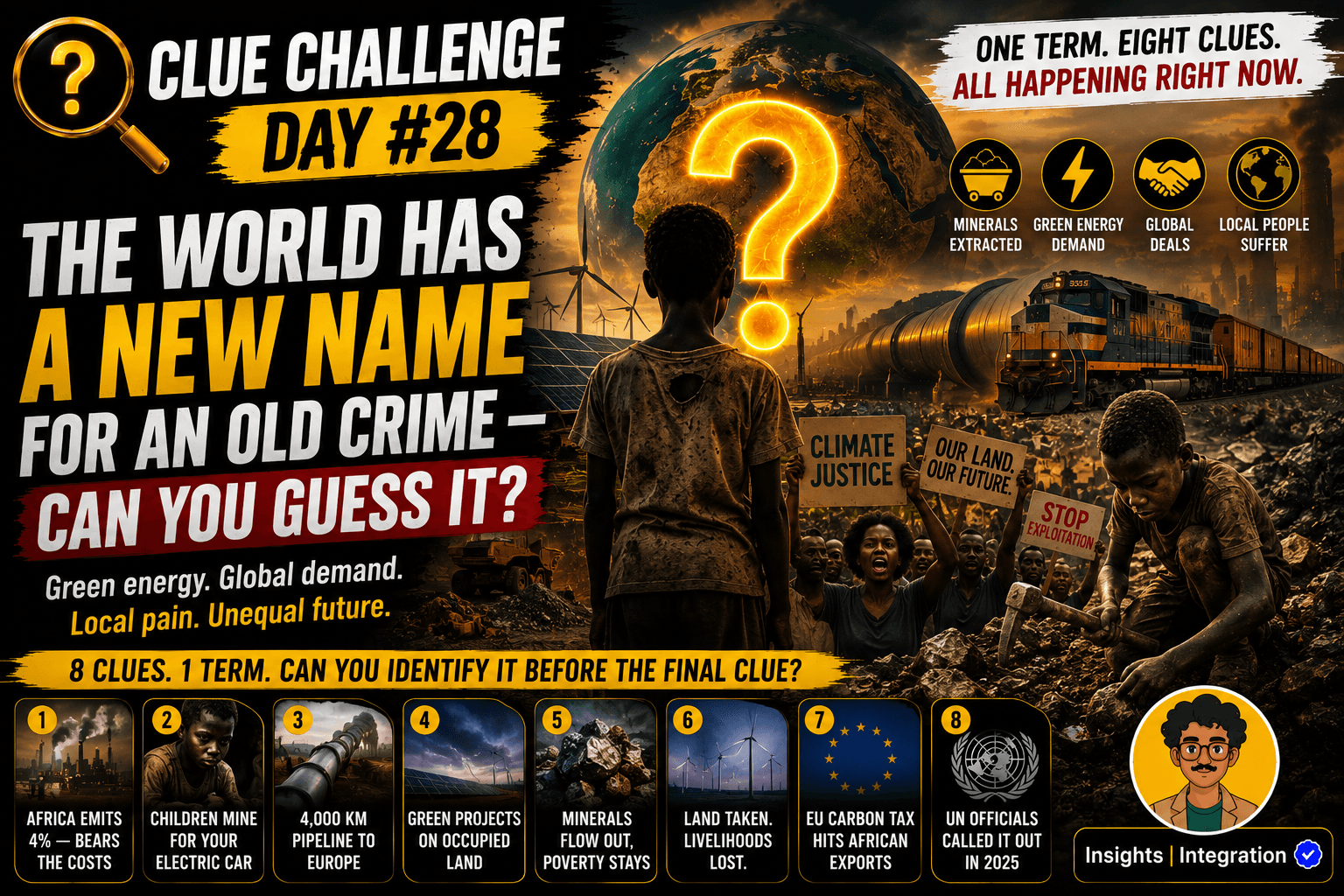
A daily puzzle for curious minds. One term. Eight clues. All happening right now.
Something is hiding inside the green energy revolution. It wears the language of climate justice, sustainability, and saving the planet. But activists, economists, and UN officials are calling it out by a two-word phrase that didn’t exist 20 years ago — and is now one of the most explosive terms in global politics.
Can you name it before the final clue?
Clue #1 — Africa emits 4% of global emissions. Yet it’s being carved up to solve everyone else’s problem
Africa contributes less than four percent of global greenhouse gas emissions — yet the continent is increasingly framed as a carbon sink, a conservation frontier, and a supplier of minerals essential for the green energy transition. The costs stay local. The profits leave.
Clue #2 — A child in a Congolese mine is powering your electric car
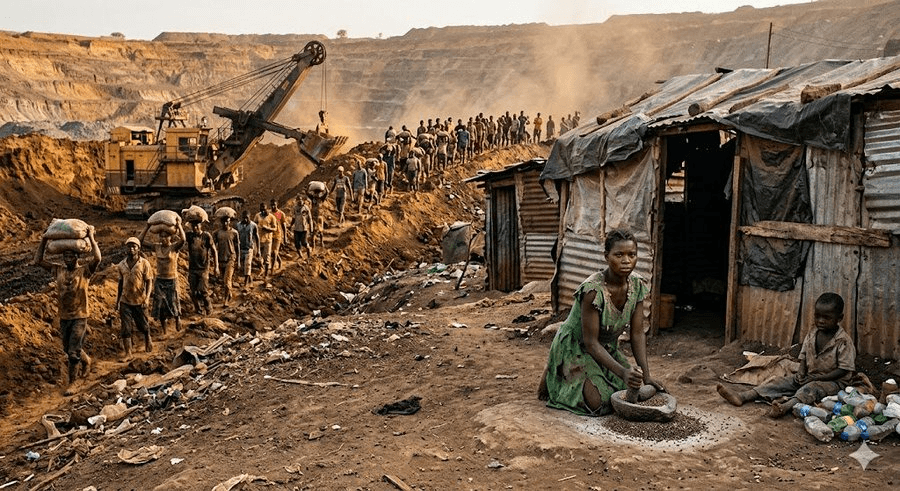
In February 2026, a former US Ambassador testified before the House Foreign Affairs Sub-Committee that while the world is chasing cobalt, tantalum and tungsten to power the renewable transition, it cannot be paid for by the exploitation occurring in the DRC — where women and children are abused in the name of a “green economy.” A May 2026 conference on cobalt supply chains focused heavily on securing minerals for electric vehicles, while giving far less attention to the environmental and social fallout in mining communities.
Clue #3 — Europe is building a 4,000 km pipeline through North Africa — for itself
In January 2025, Germany, Italy, Austria, Algeria, and Tunisia signed a Joint Declaration of Intent for the Southern Hydrogen Corridor — a proposed 4,000 km pipeline to transport green hydrogen from North Africa to Europe, described by Germany’s Secretary of State as “utilising North Africa’s immense potential.” Tunisia would produce it. Europe would consume it. Tunisia’s national hydrogen strategy plans to use 248 million cubic metres of desalinated water by 2050 — in a country already facing severe water scarcity.
Clue #4 — Morocco is building solar farms on occupied land
Morocco’s push to become a green hydrogen powerhouse has moved straight into Western Sahara — a territory it has occupied since 1975, still listed as a Non-Self-Governing Territory by the United Nations. In June 2025, seven green hydrogen projects worth $32.8 billion were confirmed, with a $25 billion hydrogen-ammonia complex planned at Dakhla — deep inside the contested territory — for export to Europe. Civil society has a two-word name for this. What is it?
Clue #5 — Minerals flow out. Poverty stays in
Africa holds more than 30% of the world’s critical green minerals — including cobalt, lithium, manganese, and rare earth elements vital for batteries, wind turbines and solar panels — yet this has not translated into prosperity for the continent. Critics warn this geopolitical race risks inaugurating a new era of resource colonialism, where raw materials are exported from developing countries to be refined into higher-value products elsewhere.
Clue #6 — Wind farms are rising where pastoralists once grazed
As mineral-rich lands are carved up for lithium and cobalt, and wind and solar farms rise where pastoralists once grazed, and new debts are incurred to fund infrastructure meant for export markets — Africa is being reinserted into the global economy not as a sovereign agent, but as a supplier of transition commodities. Same pattern. New green packaging.
Clue #7 — The EU is now charging Africa a carbon tax on its own exports
The EU introduced the Carbon Border Adjustment Mechanism (CBAM) in 2026, requiring importers to pay a carbon tax. Around 7% of South African exports currently face this tax — a figure that could rise to 19% by the 2030s, particularly hitting primary resources like iron, steel, and aluminium. Wealthy nations that industrialised on fossil fuels are now taxing developing nations for not yet being green enough.
Clue #8 — The UN called it out. Loudly. In September 2025
At the Africa Climate Summit 2025 in Addis Ababa, the UN Economic Commission for Africa’s Executive Secretary declared: “We cannot afford to repeat the exploitative patterns of the past. Africa must industrialise using its own resources, creating jobs and sustainable growth for our people.” The two-word term activists are using to describe what he was warning against is your answer.
So — what is the term?
It describes a system where:
- Rich nations outsource their emissions problem to poorer ones
- Climate-friendly language is used to extract resources without accountability
- Children mine cobalt so wealthy consumers can drive electric cars
- Wind farms and hydrogen pipelines are built for European energy security on African land
- The green transition reproduces the exact patterns of 19th-century colonialism — just with solar panels
Two words. Increasingly used by the UN, activists, academics, and African governments.
Bonus — can you also name:
- The African territory where green hydrogen projects sit on occupied land
- The 4,000 km pipeline planned to run from North Africa to Europe
- The EU tax mechanism now penalising African exporters for carbon emissions
- The DRC mineral — mined by children — found in every electric vehicle battery
Drop your answer below. Day #29 arrives tomorrow.
Missed yesterday’s challenge?
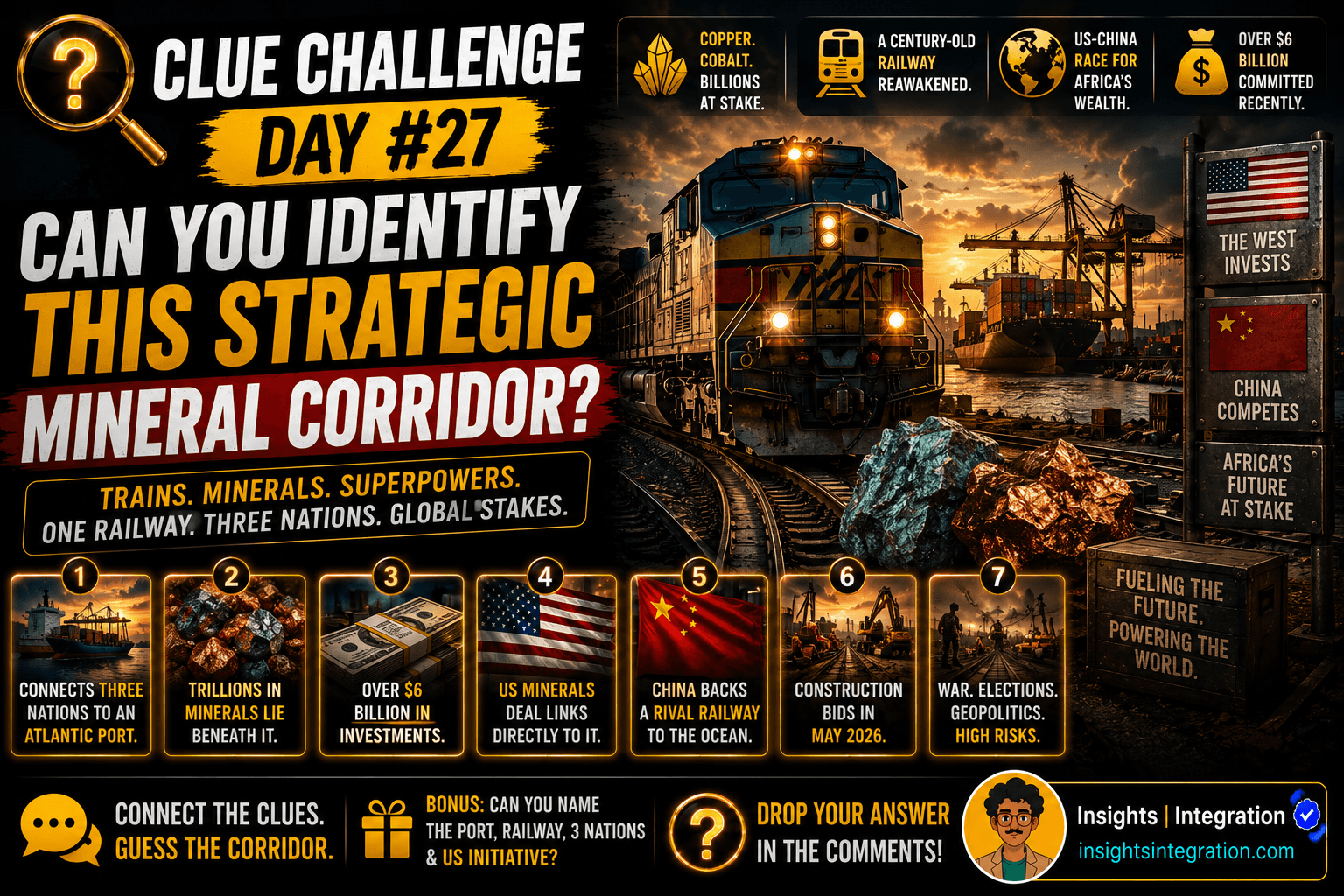
Check it here → Clue Challenge Day #27: Can You Identify This Strategic Mineral Corridor?
Answer to Yesterday’s Challenge: DAY #27
(Click above to reveal)