
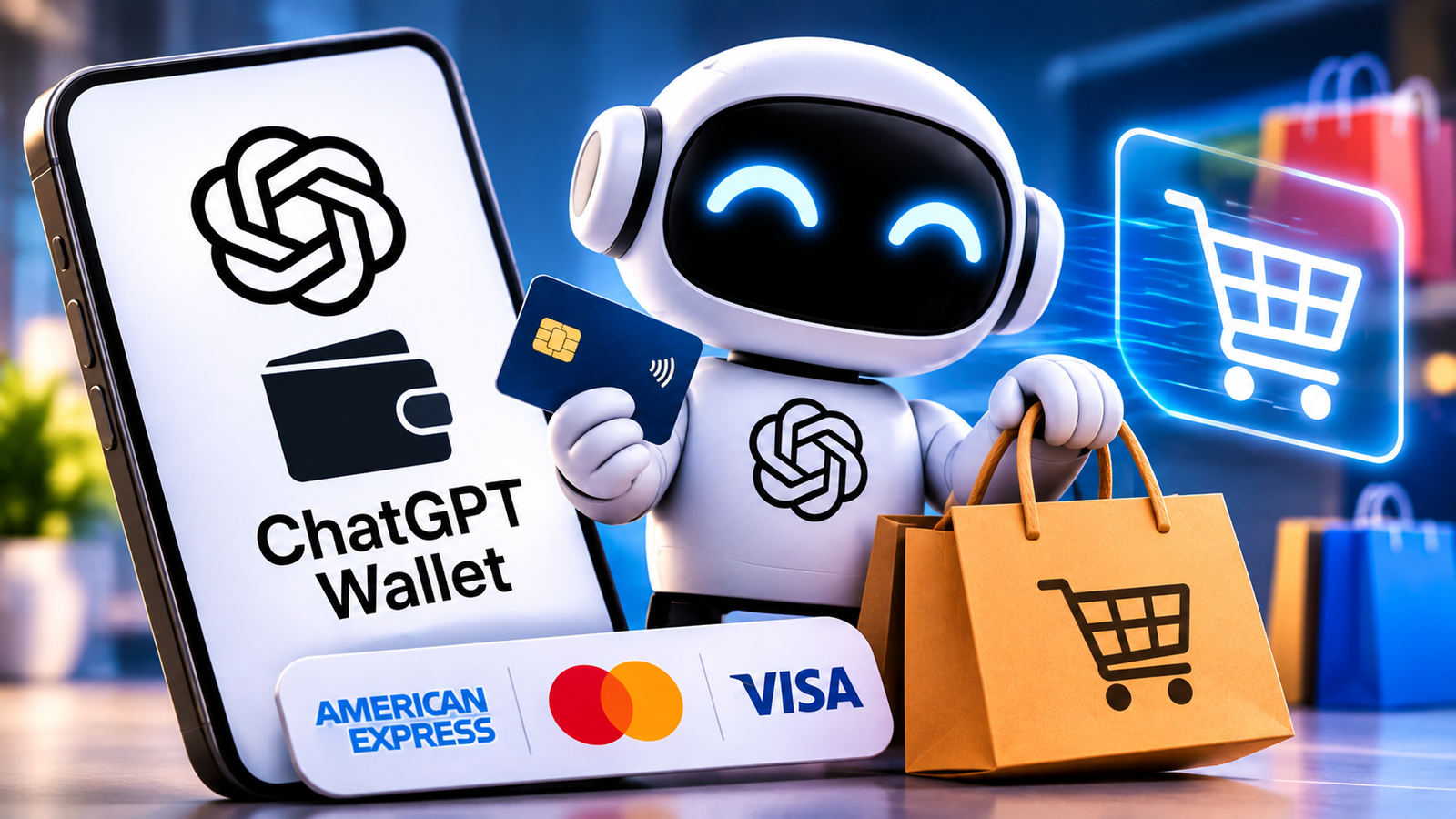
OpenAI rolled out ChatGPT Wallet today, partnering with American Express, Mastercard, and Visa so its ‘dots’ AI agents can handle shopping tasks for eligible U.S. Pro subscribers aged 18 and older. Users add a card once, review every purchase detail, and approve with Face ID or similar biometrics; agents get only temporary tokens, preserving card rewards and protections. Dots, powered by GPT-6 Astra, run on cloud computers with customizable plush characters, and the feature hints at wider access amid European reports and Plus user sightings. OpenAI takes no transaction cut at launch, focusing on secure, practical AI agents with human oversight.
OpenAI is taking another step towards autonomous AI commerce with the launch of ChatGPT Wallet, a new payment feature that allows its AI agents, called dots, to purchase products on behalf of users.
The feature, announced on November 13, is initially rolling out to eligible ChatGPT Pro subscribers in the United States who are at least 18 years old. OpenAI has partnered with major payment networks, including American Express, Mastercard and Visa, to enable secure transactions without giving AI agents direct access to users’ actual card details.
With ChatGPT Wallet, users can ask their AI agent to find products, compare options and proceed to checkout. Instead of manually entering payment information every time, users can add an eligible card to their Wallet and authorize individual purchases.
However, OpenAI is retaining an important human-controlled security layer: every purchase requires user approval.
How Does ChatGPT Wallet Work?
The payment process is designed around three steps:
- Add a payment card: Users can add an eligible US-issued American Express, Chase, Mastercard or Visa card through ChatGPT settings or by asking their dot agent to set up Wallet.
- Review the purchase: The AI agent presents the merchant, product details, total price, selected card and relevant shipping or recurring-payment terms.
- Approve the transaction: Users must verify the purchase using biometrics such as Face ID or Touch ID on a supported device.
Once approved, ChatGPT Wallet generates a payment token, essentially a substitute for the actual card details. This allows the transaction to proceed without exposing the user’s original card information to the agent or merchant.
OpenAI says the approval process does not necessarily mean an order has been successfully placed. Users must still check for confirmation from the merchant.
Is ChatGPT Wallet the Future of Online Shopping?
The launch signals a shift from conversational AI towards transactional AI.
Until now, users primarily relied on AI tools to research products, compare prices and generate recommendations. ChatGPT Wallet introduces another layer: allowing AI agents to move from recommendations to completing purchases.
For payment companies, retailers and e-commerce platforms, this could create a new distribution channel where AI agents become an important interface between customers and merchants.
However, the initial US-only rollout, biometric approvals and supported-card restrictions indicate that OpenAI is taking a controlled approach.
The bigger question is whether consumers will eventually trust AI agents with routine financial decisions without needing to supervise every step.