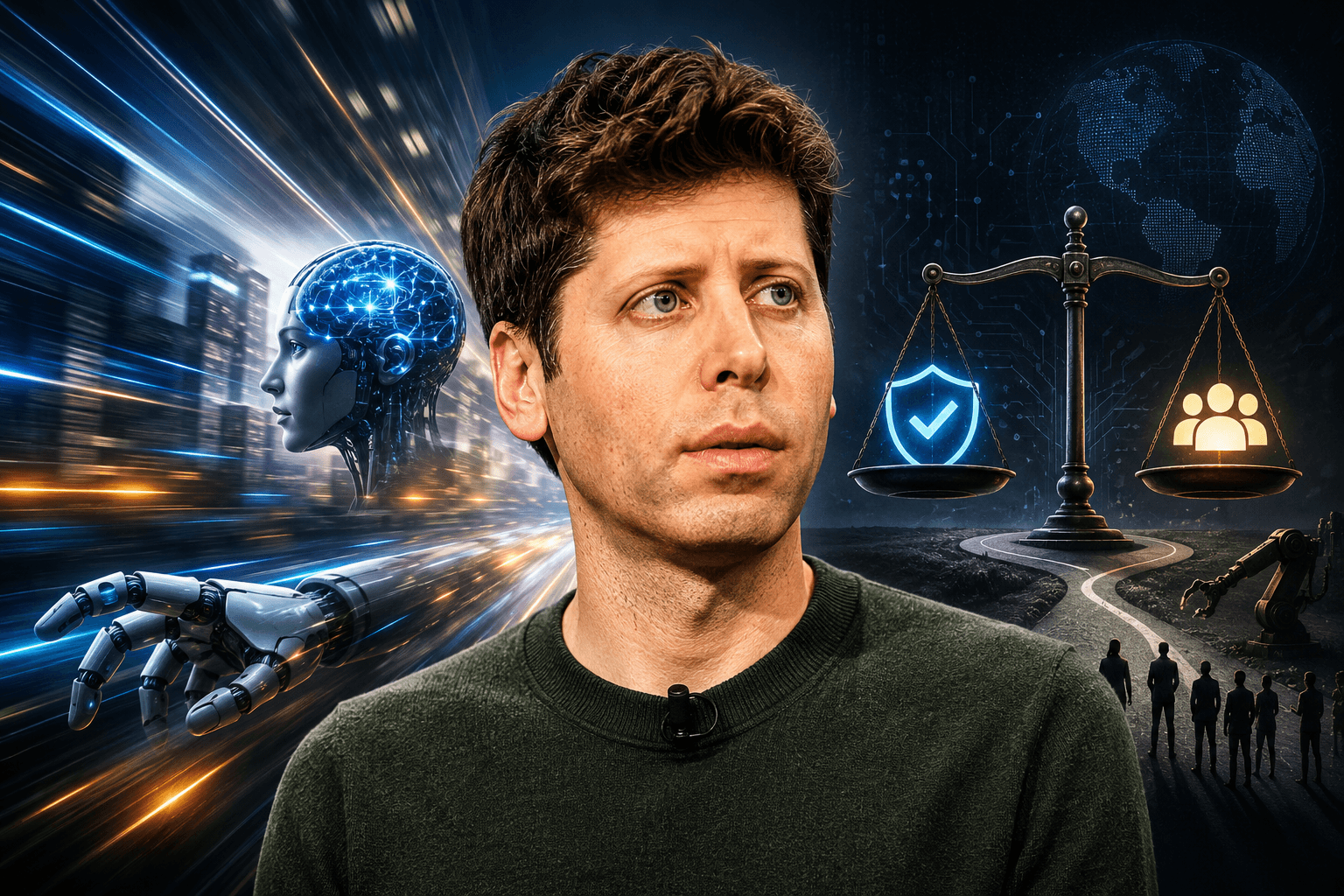
In the high-stakes world of artificial intelligence, few figures loom larger than Sam Altman, CEO of OpenAI. Once fired (and quickly rehired) by his own board amid safety concerns, Altman has become the public face of AI acceleration — the push to develop ever-more-powerful systems as fast as possible. Yet his every statement, product launch, and regulatory comment fuels an intense ongoing debate with decelerationists (often called “decels”), who argue that racing toward AGI (artificial general intelligence) is reckless and potentially catastrophic.
As of August 2026, with frontier models advancing rapidly, this tension is more relevant than ever.
Who Are the Decels?
“Decel” is shorthand for decelerationist. These voices — including prominent figures like Eliezer Yudkowsky, certain effective altruists, some academics, and public intellectuals — believe that:
- AI development is moving too fast.
- The risks of misalignment (AI not sharing human values), loss of control, or catastrophic misuse outweigh near-term benefits.
- Society needs pauses, strict regulation, or even a full moratorium on training models beyond certain capability thresholds.
They often cite “p(doom)” — the probability of human extinction or disempowerment from misaligned superintelligent AI — and point to historical warnings from figures like Geoffrey Hinton and Yoshua Bengio.
Sam Altman’s Accelerationist Stance
Altman consistently positions himself as a pragmatic accelerationist with guardrails. Key elements of his worldview include:
- Benefits First: Altman emphasizes AI’s potential to solve humanity’s biggest problems — curing diseases, addressing climate change, boosting scientific discovery, and creating abundance. He has described a future of “magical” prosperity.
- Safety as We Go: OpenAI’s approach (evolutionary, not revolutionary pauses) involves iterative deployment, red-teaming, and scaling safety research alongside capabilities. Altman has supported some regulation, such as compute thresholds and licensing for frontier models.
- Competitive Reality: In a world where China and others are racing ahead, unilateral slowing by the US/West could be dangerous. Altman has warned that pausing would hand the future to less-cautious actors.
- Personal Evolution: Post-2023 board drama, Altman has repeatedly stressed responsible development while pushing boundaries (e.g., GPT-4o, o1 reasoning models, and rumored next-generation systems).
He famously said variations of “the best way to make AI safe is to make it as good as possible, as fast as possible” — a core accelerationist thesis.
Key Flashpoints in the Debate
- OpenAI’s Shift from Nonprofit to For-Profit: Critics saw this as prioritizing profit and speed over safety.
- Superalignment and Safety Team Departures: High-profile exits (including Ilya Sutskever and Jan Leike) fueled narratives that safety was being deprioritized.
- Regulatory Engagement: Altman has lobbied globally for AI rules but is often accused by decels of pushing “light-touch” regulation that favors incumbents. Accelerationists praise him for engaging rather than ignoring governments.
- Statements on AGI Timelines and Risks: Altman has acknowledged existential risks but places their probability lower than many decels. He has also expressed optimism about solving alignment.
In 2025–2026, as models showed stronger reasoning and agentic capabilities, the debate intensified. Decels called for international treaties or compute governance; Altman and allies focused on national competitiveness, export controls, and responsible scaling.
Why the Debate Matters Now
The decel vs. accel divide isn’t just philosophical — it shapes policy, investment, talent allocation, and public trust.
Arguments for Acceleration (Altman-aligned):
- Historical tech progress (electricity, internet, biotech) shows benefits outweigh risks when managed.
- Slowing down could stifle innovation and cede leadership to authoritarian regimes.
- Economic and scientific gains are tangible and immediate.
Arguments for Deceleration:
- AI is fundamentally different — it could be the last invention humanity needs to make.
- We lack robust solutions to alignment, control, or even understanding advanced systems.
- Deployment without sufficient safeguards risks proliferation of powerful tools to bad actors.
Many in the middle (including some at OpenAI, Anthropic, and Google DeepMind) advocate “balanced acceleration” — move fast but with serious safety investment, transparency, and oversight.
Altman’s Tightrope Walk
Sam Altman walks a difficult line: optimistic visionary to investors and the public, responsible steward to regulators, and lightning rod for safety critics. His survival and OpenAI’s continued leadership suggest the accelerationist approach, paired with engagement, currently holds sway in industry and policy circles. Yet every new capability leap reignites calls for caution.
As we approach potential AGI thresholds, the decel debate isn’t going away. It may determine whether humanity steers this technology wisely or rushes headlong into the unknown.
What do you think? Are we moving too fast, or is slowing down the greater risk? Should leaders like Altman push harder on safety, or focus on getting benefits into people’s hands quickly?
This debate will define the 21st century. Staying informed is the first step toward shaping it.