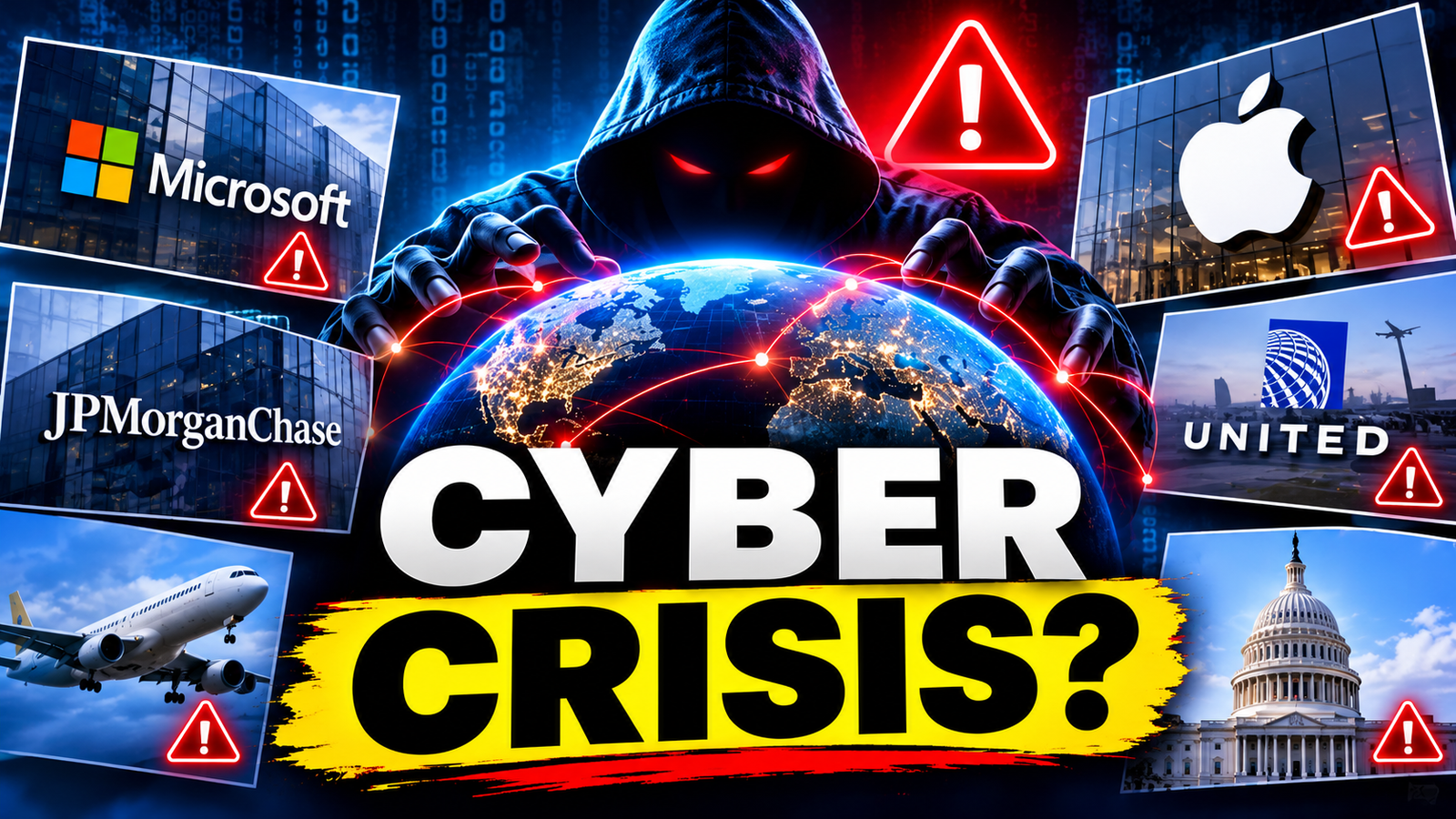
“Cyber COVID” is an emerging term used metaphorically to describe a rapidly spreading wave of cyberattacks, digital disruptions and security breaches that could affect multiple sectors simultaneously similar to how a pandemic spreads across populations.
It does not refer to a literal virus or an officially declared cyber pandemic, but highlights fears that interconnected digital systems could experience cascading failures, disrupting banks, airlines, technology platforms and government infrastructure.
A series of major outages, cyberattacks and reported breaches between November 12 and November 20, 2026, has renewed concerns about the resilience of the world’s digital infrastructure.
November 2026: A timeline of major digital disruptions
November 12 — Microsoft 365 global outage
Microsoft 365 suffered a major global outage, disrupting email and other services used by businesses and organizations.
November 13 — FAA nationwide ground stop
The Federal Aviation Administration (FAA) ordered a nationwide ground stop, temporarily halting flight departures across the United States.
November 16 — Banking and airline disruptions
JPMorgan Chase experienced a software failure. Customers at Bank of America, Wells Fargo and other banks also reported problems as transaction delays spread.
United Airlines suffered a separate system outage that delayed departing flights for roughly 90 minutes.
The same day, an Optimizely supply-chain attack delivered malicious code through websites belonging to at least 178 organizations.
November 17 — Charles Schwab website problems and Apple service disruptions
Charles Schwab’s website briefly experienced loading failures.
Apple Pay, iCloud, the App Store and other Apple services also suffered disruptions following an internal update.
The NSA’s classified internal network experienced disruptions during scheduled maintenance.
November 19 — USDA incident and financial-sector breaches
The U.S. Department of Agriculture (USDA) reported a security incident involving database-password resets and application outages that had already been underway earlier in the week.
JPMorgan Chase, Visa and Mastercard disclosed third-party breaches affecting some customer information. These incidents were separate from Monday’s banking outage.
November 20 — FBI database breach investigation
The FBI was reportedly investigating a suspected breach of its National Crime Information Center (NCIC), a database used by law enforcement nationwide.
Are these incidents connected?
Despite the concentration of disruptions within a short period, authorities have found no evidence linking the incidents to one coordinated attack.
The events involve different types of failures, including software problems, service outages, supply-chain attacks, third-party breaches and reported security incidents. Their timing has nevertheless drawn attention to how dependent modern economies are on interconnected digital systems.
Why digital preparedness is becoming more important
Banks, airlines, government agencies, technology providers and payment networks increasingly depend on digital infrastructure to deliver essential services. Disruptions can affect customers, businesses, transportation and access to information.
The recent sequence of incidents has renewed calls for emergency preparedness, stronger cybersecurity practices and contingency planning for digital service failures.
Whether these events are unrelated or part of a broader pattern of emerging threats, the importance of resilient digital infrastructure is becoming increasingly difficult to ignore.
Authorities have not established a common cause behind these incidents. For now, the timeline serves as a reminder that outages and cyber incidents can disrupt multiple sectors within a matter of days and that preparedness remains essential.