
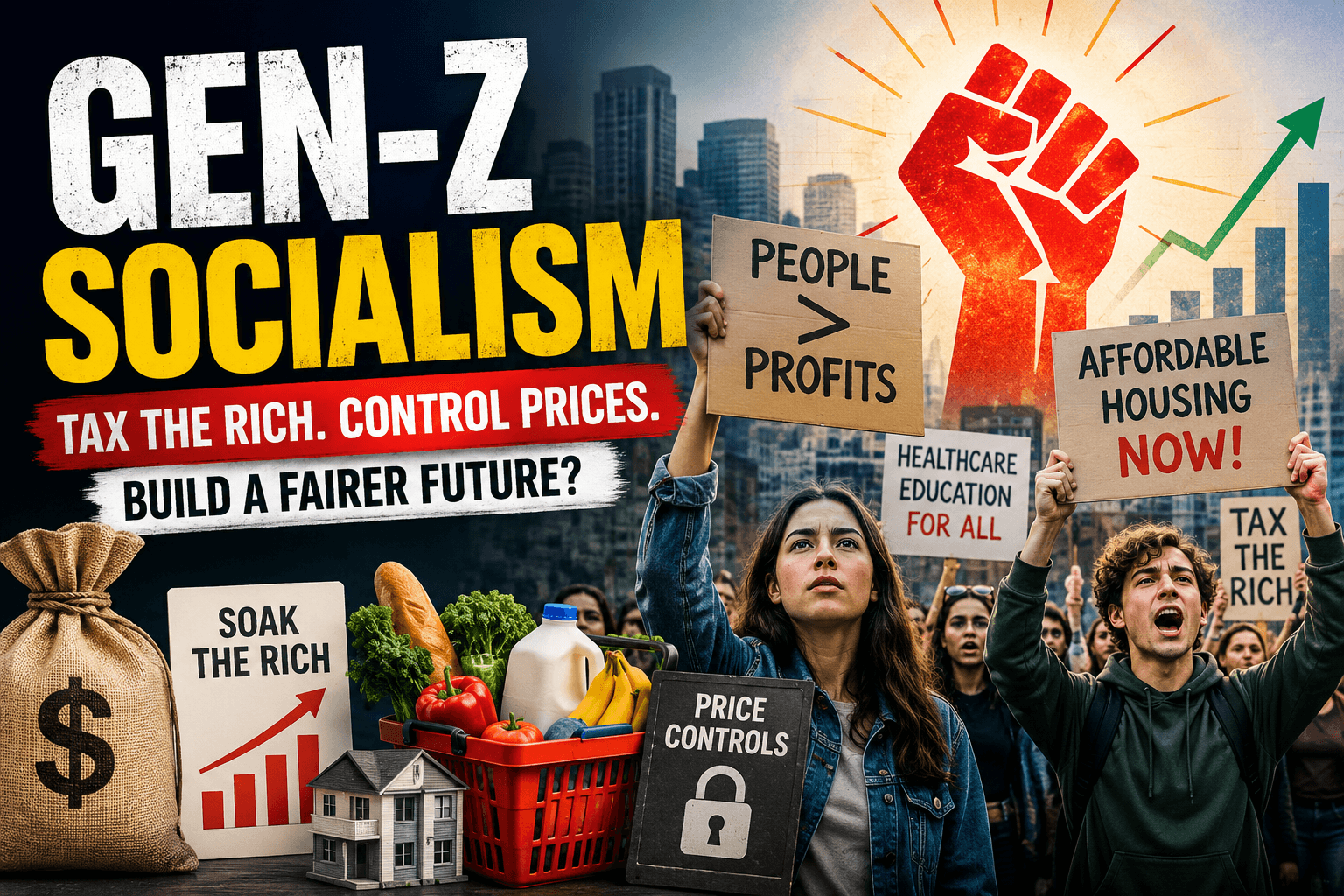
Gen-Z Socialism is a growing political trend in which many young people support higher taxes on the wealthy, stricter price controls on essential goods, and greater government intervention in the economy. The movement has gained attention as rising housing costs, expensive groceries, student debt, and stagnant wages make it harder for young adults to achieve financial stability.
Why Is Gen-Z Socialism in the News?
The term has become popular in political debates, especially in the United States and Europe, where surveys show younger voters are more open to socialist-leaning policies than previous generations. Instead of focusing only on wealth redistribution, Gen-Z Socialism emphasizes making everyday necessities more affordable.
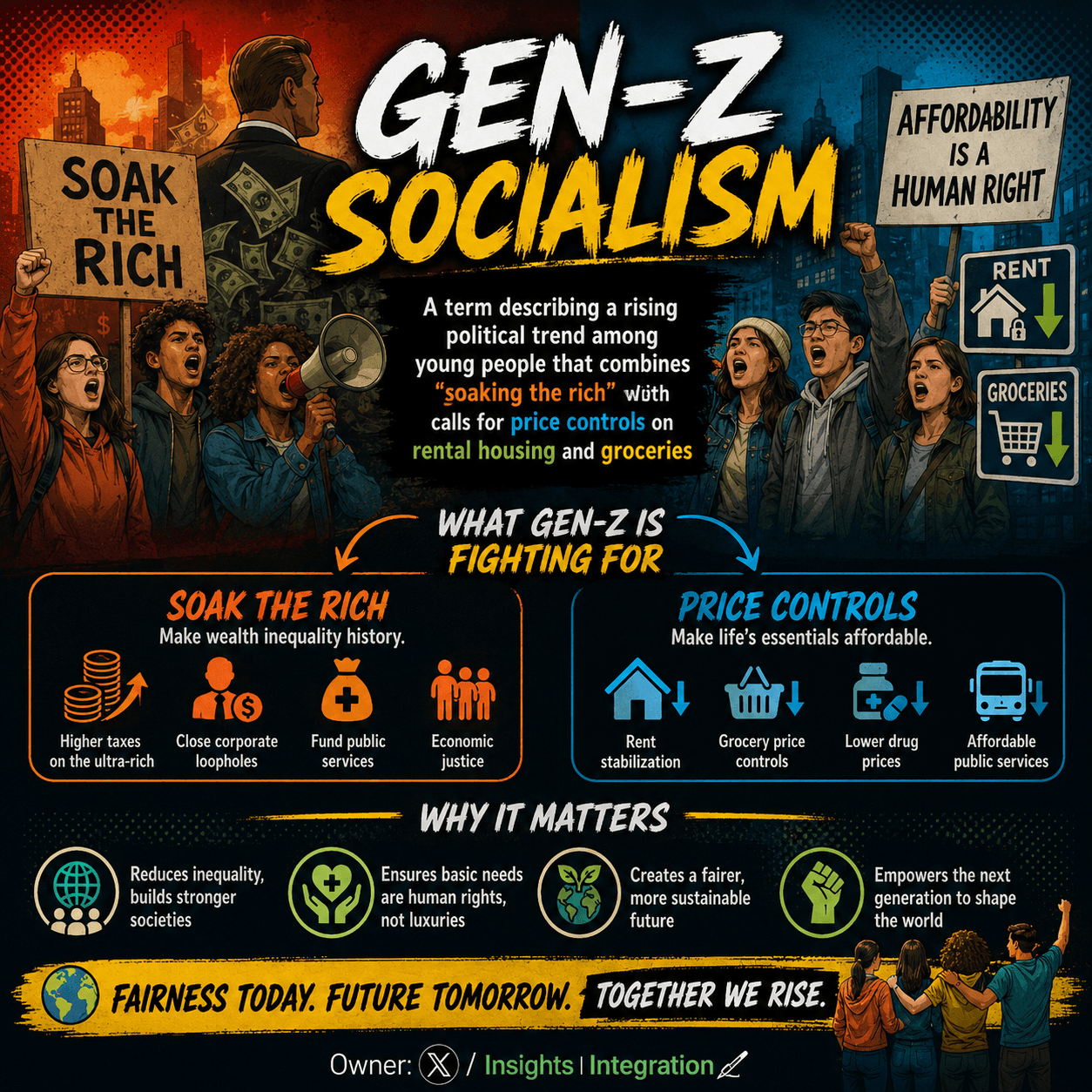
Key Features of Gen-Z Socialism
- Higher taxes on the wealthy to reduce income inequality.
- Price controls on rental housing and essential groceries.
- Affordable healthcare and education funded by the government.
- Stronger labor rights, including higher minimum wages and better working conditions.
- Greater regulation of large corporations to prevent excessive profits and monopolies.
Why Is It Gaining Support?
Several economic challenges have fueled this trend:
- Housing prices and rents have risen much faster than incomes.
- Food inflation has increased the cost of daily living.
- Student loan burdens continue to affect millions of young people.
- Many Gen-Z workers face insecure jobs in the gig economy despite higher education levels.
Supporters argue that markets alone have failed to ensure affordable living, making stronger government intervention necessary.
Criticism of Gen-Z Socialism
Economists and free-market advocates caution that some proposed policies may have unintended effects.
- Price controls can discourage production and investment, leading to shortages.
- Higher taxes may reduce business investment and economic growth.
- Excessive government intervention could lower market efficiency and innovation.
Critics instead recommend increasing housing supply, boosting competition, and targeted welfare measures.
Global Relevance
Although the term is widely discussed in the United States, similar debates are emerging across Europe, Canada, and parts of Latin America. Rising inequality and cost-of-living pressures are reshaping political preferences among younger generations worldwide.
Why It Matters
Gen-Z Socialism reflects a broader shift in political thinking driven by economic hardship rather than ideology alone. As younger voters become a larger share of the electorate, their demand for affordable housing, cheaper essentials, and greater economic equality is likely to influence future public policy, elections, and debates on the role of government in the economy.