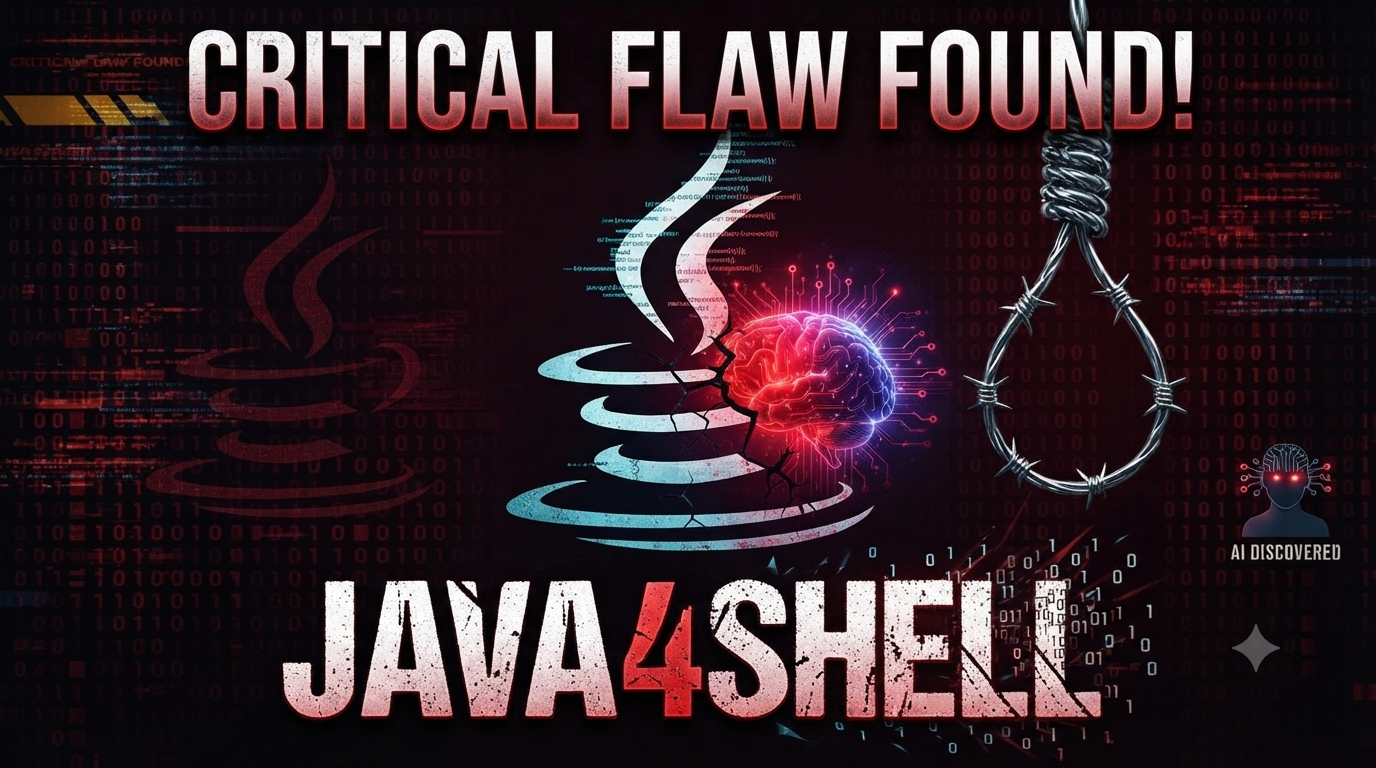
A cybersecurity startup called Calif used OpenAI’s Codex coding agent to uncover a critical security flaw in Java—one of the world’s most widely used programming languages—in roughly one hour, then built a working exploit in about two more hours for under $200 in computing costs.
The vulnerability, tracked as CVE-2026-114938 and nicknamed Java4Shell, is a memory-corruption bug in OpenJDK’s hardware-accelerated Base64 decoder. It can be triggered by a simple malformed input (as little as 64 “A” characters followed by a single “=”) and can lead to heap memory corruption, data leakage (similar to Heartbleed), or remote code execution. Calif rated it 9.2 out of 10 in severity.
The flaw affects OpenJDK 17.0.6 and later (and corresponding Oracle Java SE versions) running on x86-64 processors that support AVX-512 VBMI instructions. ARM-based systems are not affected. Researchers demonstrated pre-authentication remote code execution on several widely used applications in default configurations, including Keycloak, Atlassian Jira and Confluence, Jenkins, JFrog Artifactory, and PingFederate. Additional products were shown to be vulnerable after authentication.
Java powers an estimated 90% of Fortune 500 companies and is heavily used by banks, hospitals, governments, and major tech firms, making the potential impact significant. Oracle and the OpenJDK project released fixes on November 17, 2026. Organizations are strongly advised to update promptly; a temporary workaround is the JVM flag -XX:-UseBASE64Intrinsics.
The discovery highlights both the power of AI-assisted vulnerability research and the ongoing challenge of securing foundational software that underpins much of the modern internet and enterprise infrastructure.