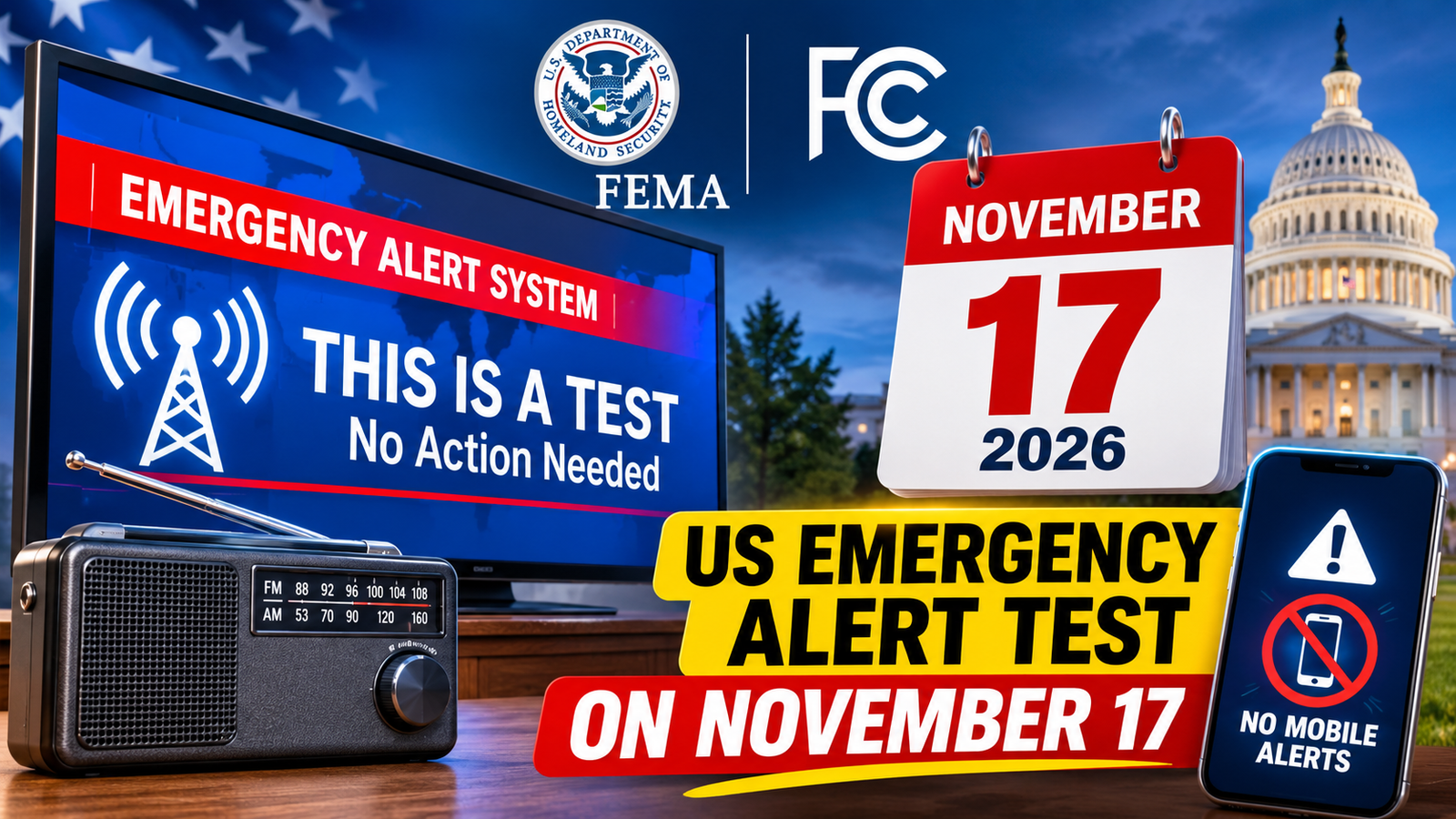
The Federal Emergency Management Agency and Federal Communications Commission will conduct a nationwide Emergency Alert System test on November 17 at 2:20 p.m. ET, interrupting radio, TV, cable, and satellite for one minute with a clear ‘test only’ message. It’s the first such test in three years, required by law, with no cell phone alerts this time and no public action needed. Social media mixes memes from a 2023 Simpsons episode, old images, and conspiracy claims with official reminders, while authorities stress it ensures alerts work for real crises.
The United States is scheduled to conduct a nationwide Emergency Alert System (EAS) test on November 17, 2026, as federal authorities check the reliability of communication networks used during major emergencies.
The routine exercise is being coordinated by the Federal Emergency Management Agency (FEMA) and the Federal Communications Commission (FCC). It is designed to ensure that emergency messages can reach the public through television and radio broadcasting systems when disasters or other national emergencies occur.
During the brief test, television and radio audiences will hear or see a message explaining that the transmission is only an exercise. Officials say people do not need to take any action.
Importantly, this particular test will not send alerts to mobile phones. It will focus on broadcast television and radio rather than triggering the Wireless Emergency Alerts system.
Simpsons Blackout Rumours Fuel Online Speculation
The announcement has also attracted attention because of online rumours linking the November 17 test to a supposed global blackout predicted in a 2023 episode of The Simpsons.
However, there is no verified evidence connecting the television programme to the scheduled emergency alert exercise. Authorities describe the test as routine preparedness and system maintenance, not a warning of an impending blackout.
Why Does the Emergency Alert Test Matter?
The Emergency Alert System is an important part of US disaster preparedness. It allows authorities to distribute urgent information during events such as hurricanes, severe weather, national security emergencies and other major disruptions.
Regular testing helps identify technical problems before an actual crisis occurs.
For households, keeping a battery-powered radio can also be useful during prolonged power outages when internet connectivity and television services become unavailable.
The November 17 exercise is a preparedness test, not an indication that the United States is expecting a nationwide emergency.