
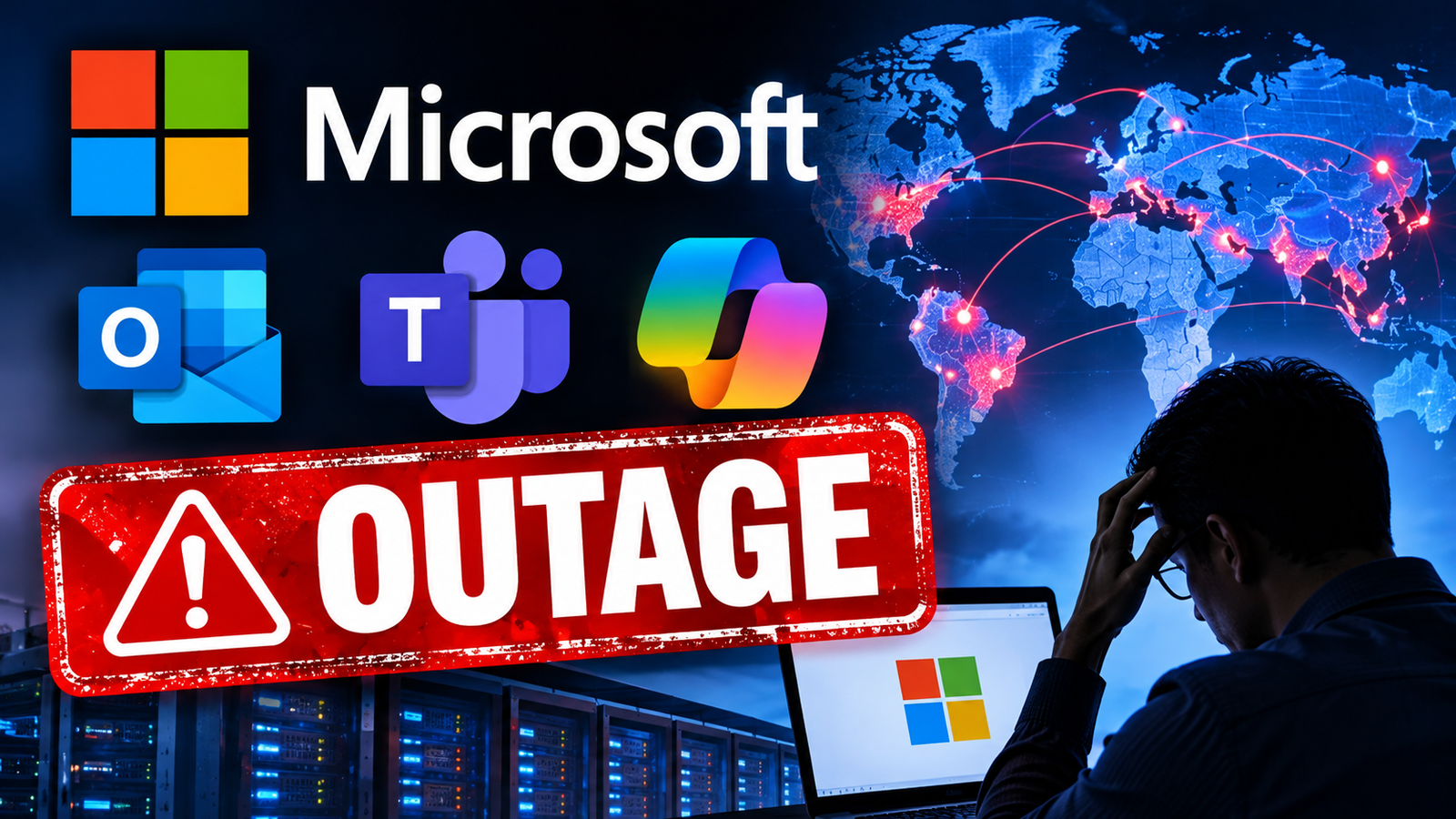
Microsoft says attempts to fix global outage not going ‘as expected’: BBC
Microsoft is struggling to restore services after a major global outage disrupted Outlook, Teams and Copilot, affecting users and businesses across more than 70 countries. The disruption has continued for several hours, with reports indicating that previously restored systems could become unavailable again as traffic returns.
Microsoft acknowledged that its recovery efforts had not delivered the expected results.
“We’ve monitored the status of changes applied to improve serviceability and confirmed they’re not taking as expected,” the company said.
What Caused the Microsoft Outage?
The disruption centres on Exchange Online, Microsoft’s cloud-based email infrastructure that powers Outlook for businesses.
Microsoft reported that several servers became unexpectedly unavailable. The company paused deployments and began restarting affected systems, but later confirmed that its initial recovery measures had not provided the anticipated relief.
The company has not confirmed the underlying cause of the outage or established whether it was connected to an earlier Teams disruption in North America.
Outlook Reports Surge as Businesses Lose Access
The outage affected Microsoft 365 services, including Outlook, Teams and Copilot. Reports came from more than 70 countries, with the disruption potentially affecting software used by approximately 450 million work accounts.
Downdetector recorded a massive surge in complaints. Outlook-related reports reached around 130,000–140,000 at the peak, with some estimates showing reports running approximately 2,000 times above normal levels.
The impact extended beyond ordinary users. A US state government and two hospital systems in Michigan reportedly lost access to email.
Even ChatGPT and Claude experienced reported disruptions linked to their Microsoft connections. Reports also spiked for Amazon Web Services (AWS), although Amazon said its services were operating normally and described those outage reports as inaccurate.
Microsoft Defender, used by organisations to detect and respond to cyber threats, was also affected.
Why the Outage Raises Cybersecurity Concerns
Prolonged disruption to business email and collaboration platforms can create opportunities for cybercriminals.
Scammers may exploit uncertainty by sending fake Microsoft recovery messages, phishing links and fraudulent IT support requests. Organisations could also face communication delays and difficulties accessing security tools.
Although outage reports have eased from their peak to approximately 37,000 as some servers returned, Microsoft has not declared the incident resolved or confirmed how many customers were affected.
The incident highlights how heavily global businesses depend on a small number of cloud platforms—and how a failure in critical infrastructure can disrupt communication across industries and countries.