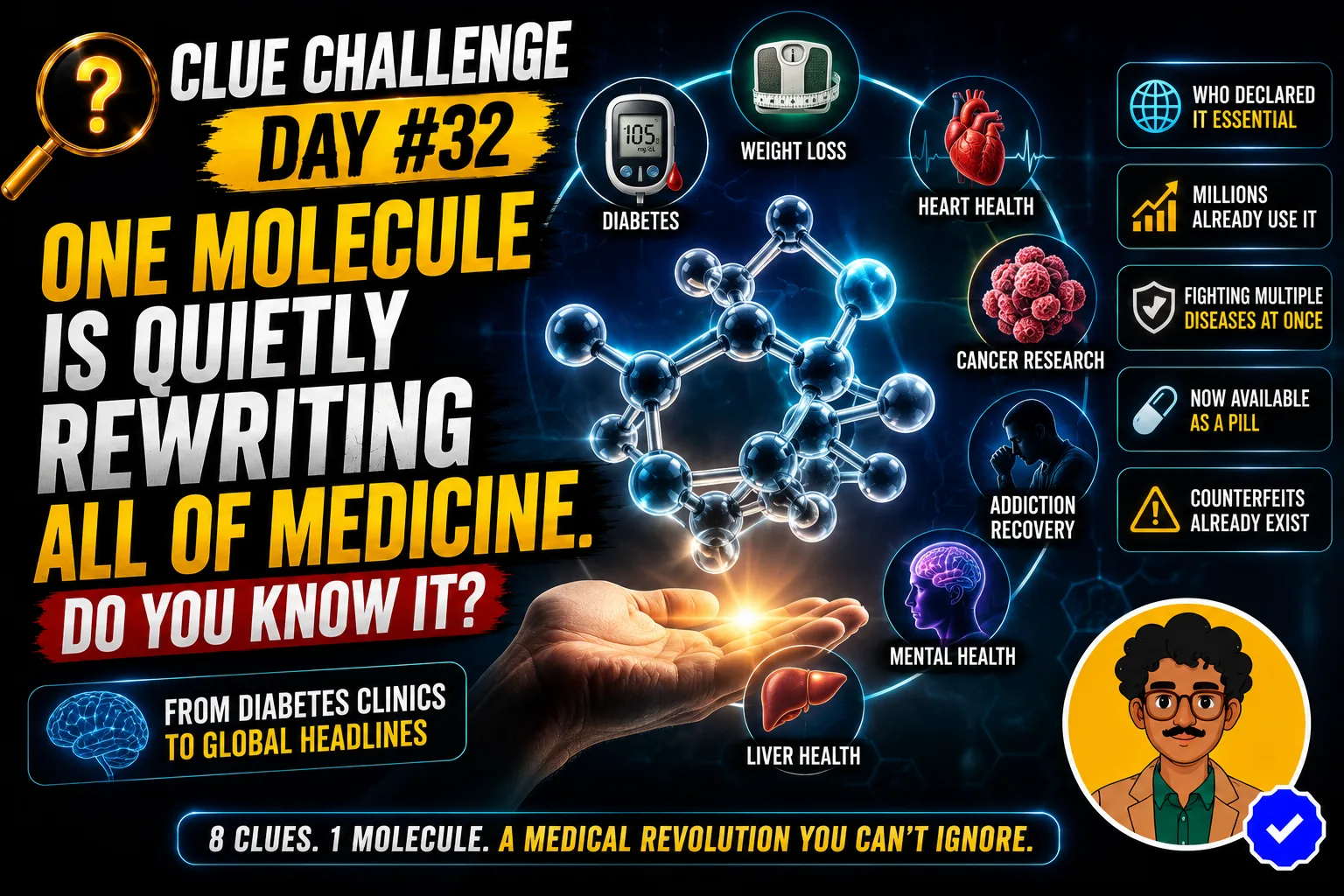
A daily puzzle for curious minds. One molecule. Eight clues pulled from the biggest medical breakthroughs of 2025–2026.
It started as a diabetes treatment.
Then patients began losing massive amounts of weight.
Then scientists noticed something stranger:
People smoking less.
Drinking less.
Craving less.
Soon, researchers were studying it for heart disease, cancer, addiction, depression, fatty liver disease, and even brain health.
Now governments are racing to expand access.
Drugmakers are investing billions.
And counterfeit versions are spreading worldwide.
One molecule is quietly becoming the most important drug discovery of the decade.
Can you identify it before the final clue?
Clue #1 — It Was Designed for Diabetes. Then Everything Changed.
Doctors originally prescribed this molecule to help patients control blood sugar.
But something unexpected happened.
Patients started losing extraordinary amounts of weight — often 15% to 20% of their body mass.
Until recently, those results were mostly associated with bariatric surgery.
Scientists quickly realized this was not just another diabetes drug.
It was affecting hunger, cravings, digestion, and brain signaling itself.
The molecule mimics a hormone your body already produces naturally after eating.
Clue #2 — The World Health Organization Now Considers It Essential
In 2025, the World Health Organization added this drug class to its Essential Medicines List.
That placed it alongside medicines like insulin, penicillin, and morphine.
At the same time, global demand exploded.
Clinics ran out.
Waiting lists grew.
Counterfeit versions appeared across international markets.
Few medicines in modern history have moved from niche treatment to global obsession this quickly.
Clue #3 — It May Be Reducing Cancer Risk Too
Researchers initially focused on weight loss and diabetes.
Then new data began pointing somewhere much bigger.
Studies published in 2025–2026 found the drug class may significantly reduce obesity-related cancers, including:
- Colon cancer
- Breast cancer
- Endometrial cancer
- Gastric cancer
One major study suggested patients taking it showed dramatically lower colon cancer mortality rates.
A treatment designed for blood sugar was suddenly being studied across oncology.
Clue #4 — It Did Something No Weight-Loss Drug Had Ever Proven Before
For decades, weight-loss drugs faced one major criticism:
They helped people lose weight — but did they actually improve survival?
This molecule changed that conversation.
A massive international trial involving more than 17,000 participants confirmed it reduced:
- Heart attacks
- Strokes
- Cardiovascular deaths
Researchers also found benefits linked to fatty liver disease and metabolic health.
One weekly treatment.
Multiple organ systems affected simultaneously.
Clue #5 — Doctors Started Seeing Addiction Cravings Fade
This clue stunned researchers.
Patients taking the drug for diabetes or obesity began reporting something unexpected:
They no longer wanted cigarettes.
Alcohol cravings weakened.
Compulsive eating declined.
Then formal studies arrived.
A major 2026 study linked this drug class to reduced risk across multiple substance-use disorders, including:
- Nicotine
- Alcohol
- Opioids
- Cannabis
- Cocaine
Scientists are now investigating whether appetite-control pathways in the brain are deeply connected to addiction itself.
Clue #6 — Mental Health Effects Emerged Too
In May 2026, another major study found people taking this medication experienced measurable mental-health improvements.
Researchers observed reductions in:
- Depression-related symptoms
- Anxiety-related health visits
- Stress-linked medical leave
The findings intensified a growing belief inside medicine:
This molecule may influence reward systems and brain signaling far beyond appetite control alone.
Clue #7 — Scientists Just Learned Why It Sometimes Stops Working
One of the biggest frustrations for patients is that the effects can plateau over time.
Now researchers think they know why.
Brain cells appear to adapt differently to the medication.
Some neurons maintain sensitivity.
Others gradually reduce their response.
Scientists are already testing combination therapies aimed at extending the drug’s effectiveness and preventing biological resistance.
Medicine is now evolving around this molecule almost in real time.
Clue #8 — The Injection Is Becoming a Pill
For years, patients needed weekly injections.
That barrier limited adoption.
Now oral versions are arriving.
New generations of these drugs are also entering trials:
- Dual agonists
- Triple agonists
- Multi-target metabolic therapies
Drugmakers believe this field could reshape treatment for obesity, diabetes, cardiovascular disease, and addiction over the next decade.
What began as a diabetes shot may become an entire new platform for medicine itself.
Final Question
So — what is the molecule?
It mimics a natural gut hormone.
It started in diabetes clinics.
It became a global weight-loss phenomenon.
Now researchers believe it may impact:
- Obesity
- Heart disease
- Cancer
- Addiction
- Depression
- Liver disease
The WHO considers it essential.
Millions already use it.
And scientists keep discovering new effects nobody originally designed it to have.
Two famous brand names made it globally famous.
But can you name the molecule itself?
Bonus Challenge
Can you also name:
- The two blockbuster brand names linked to it
- The pharmaceutical company behind them
- The hormone class it belongs to
- The 2026 study linking it to reduced addiction risk across multiple substances
Drop your answer below before Day #33 arrives tomorrow.
Missed yesterday’s challenge?
Check it here → Clue Challenge Day #31: A Chinese Tech Giant Just Declared Moore’s Law Dead — Can You Name It?
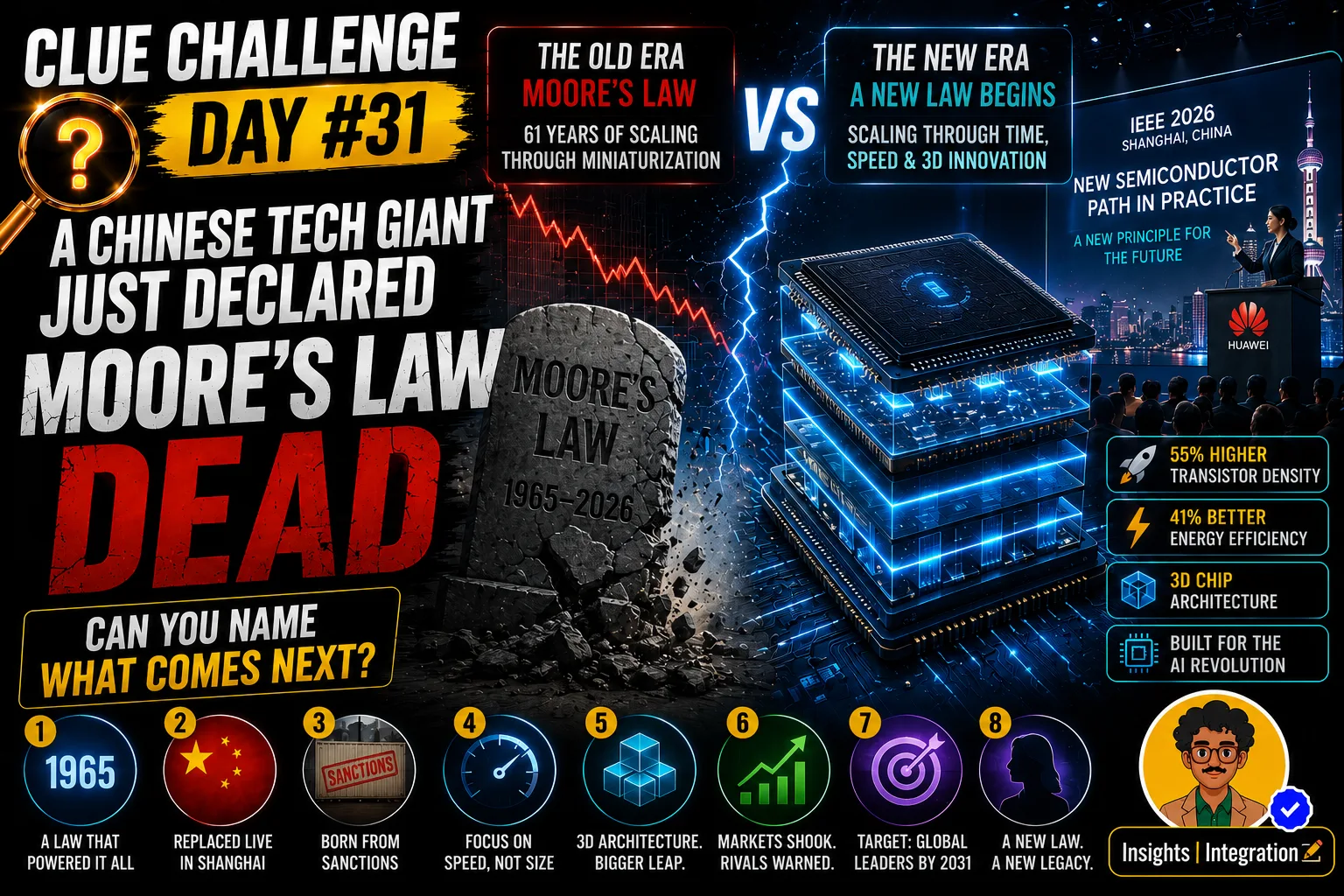
Answer to Yesterday’s Challenge: DAY #31
(Click above to reveal)